

RMT-REVOLUTION-MACHINE-TOOLS-IRONWORKER-1
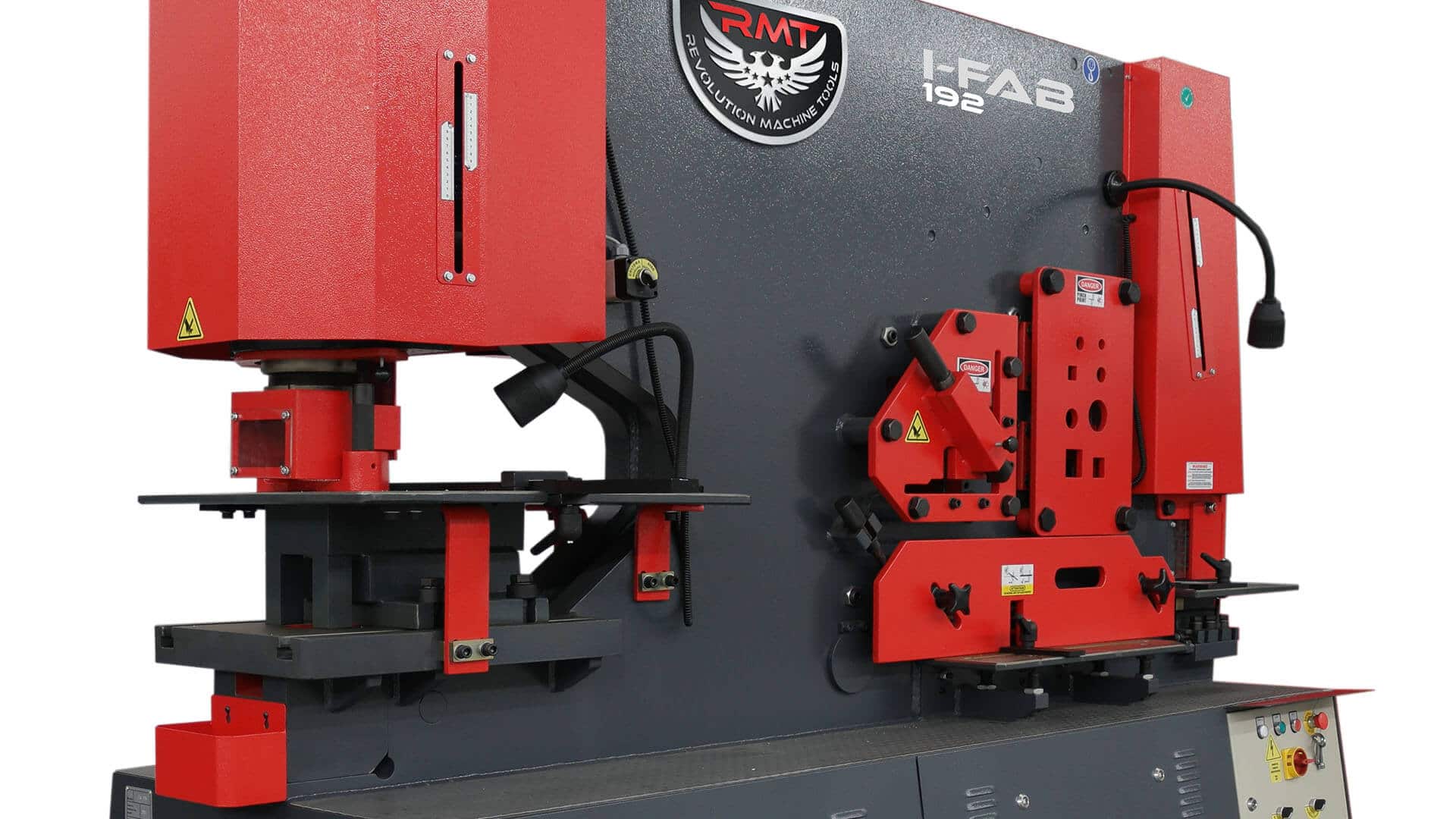
I-FAB™ Series
-
What types of operations can an RMT ironworker perform?
RMT ironworkers are versatile machines capable of punching, shearing, notching, and bending metal. Some models also handle angle, flat bar, and plate work, making them ideal for fabrication, structural, and general metalworking tasks.
-
What material thicknesses can an ironworker handle?
Capacity varies by model, but RMT ironworkers can process thin sheet metal up to heavy plate, depending on the operation and tooling used. Always consult the machine specifications to ensure your material thickness is within safe limits.
-
How do I choose the right ironworker for my shop?
Consider:
- Material types and thicknesses you work with most often
- Operations needed (punch, shear, notch, bend)
- Production volume and cycle times
- Available shop space and budget
Selecting the right model ensures efficient, safe, and versatile metalworking capabilities.
-
Can RMT ironworkers punch, shear, and notch all in one machine?
Yes — many RMT ironworkers are multi-station machines capable of performing punching, flat bar shearing, angle shearing, notching, and sometimes bending without switching equipment. This versatility saves time and shop floor space.
-
What types of tooling are available for different operations?
RMT ironworkers offer a range of interchangeable punches, dies, and blades to handle:
- Round, square, and rectangular holes
- Angle, flat bar, and plate shearing
- Notching and bending applications
Using the correct tooling ensures clean cuts and long tool life.
-
What safety features are built into RMT ironworkers?
RMT ironworkers include:
- Emergency stop buttons
- Two-hand operation or foot pedal controls to prevent accidental activation
- Safety guards around punch and shear areas
Operator manuals and training to ensure safe operation and reduce injury risk
-
How do I maintain my ironworker to ensure long-term performance?
- Regularly lubricate moving parts and pivot points
- Inspect tooling for wear, cracks, or chips
- Check hydraulic fluid levels (for hydraulic models)
- Keep the machine clean of debris and metal chips
Proper maintenance ensures consistent operation, safety, and longevity.
-
Can RMT ironworkers handle specialty metals like stainless steel or aluminum?
Yes — RMT ironworkers can process mild steel, stainless steel, aluminum, and other alloys. Correct tooling selection, punching speed, and shear blade settings are essential for clean, precise results without damaging the machine or material.
-
Are RMT ironworkers suitable for high-production environments?
Yes — RMT ironworkers are designed for high-volume production, with durable frames, high-capacity punches and shears, and efficient setup options. Multi-station models reduce material handling time, improving throughput in busy fabrication shops.
-
Does RMT provide training or technical support for ironworker operation?
Yes! RMT provides:
- Operator training for safe and efficient use
- Technical support via phone, email, or on-site service
- Guidance on tooling, setup, and preventive maintenance
This ensures customers maximize ironworker performance, uptime, and safety.
Need help finding the right machine?
Let our experienced sales team help today.
"*" indicates required fields


