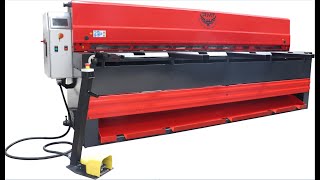
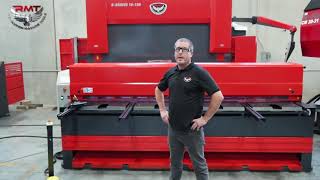
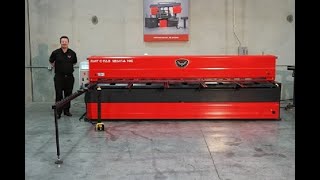
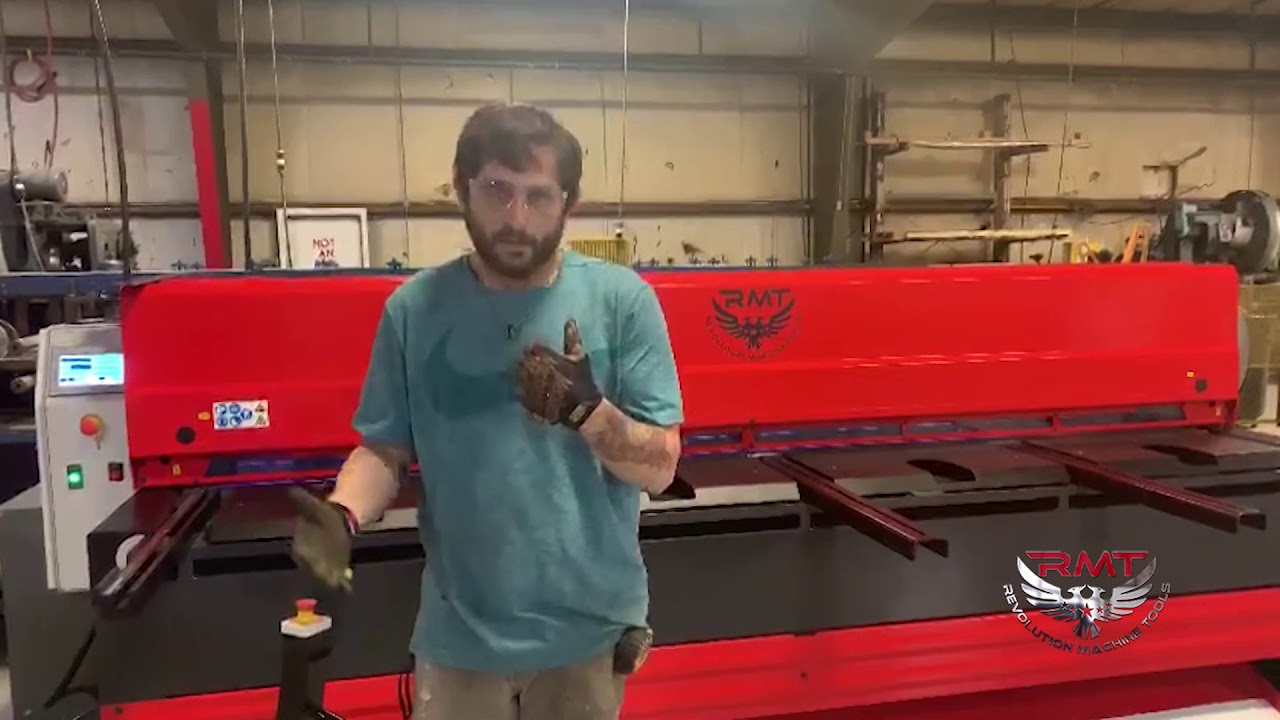
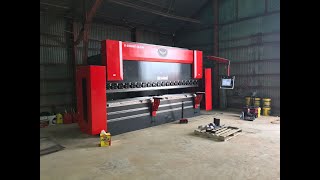
The C-GENIUS™ series is the top of the line, incorporating all the latest technology to offer the highest level of functionality. With our hydraulic angle setting and user friendly control panel, you will be able to easily cut different material thicknesses. This series is well named as only the most intelligent machines could provide speed, precision, accuracy and repeatability as our C-GENIUS™ shears.
STANDARD EQUIPMENT
Shear blades made from tough and wear-resistant alloyed material
Top blade : Two cutting edges.
Bottom blade : Four cutting edges.
Digital control unit for backgauge positioning, rake
adjustment, and blade gap setting.
Foot pedal control for single and repetitive cutting cycles.
40″ power backgauge with ballscrew spindles to 0.004″ precision.
40″ squaring arm with scale, T-slot and flip-stop.
Front support arms in 40″ length.
Digital stroke counter.
Pendant arm.
Work table with filler plates, ball transfers and hand slots.
Emergency stop buttons on the pendant and on the mainframe.
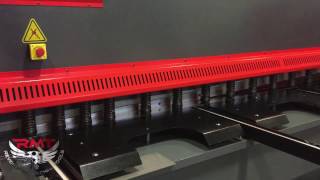
Shadow line facility with fluorescent lighting.
Finger guard and side throat guards.
OPTIONS
Multi-function electronic control units.
Siemens OP7 S7-200.
Cybelec DNC 60.
Servo driven backgauge movement.
Automatic “swing-up” backgauge mechanism for
shearing longer pieces than maximum backgauge length.
Pneumatic rear support systems for thin sheets.
Anti-twist system.
Front and rear sheet conveyor and stacking systems.
Oil cooling or heating equipment.
Throat gap deeper than standard.
Squaring arm and front arm length other than standard.
T-slotted front support arms with scale and flip-stop.
Angle gauge.
40″ lift-up front finger guard with electrically interlocked safety switch.
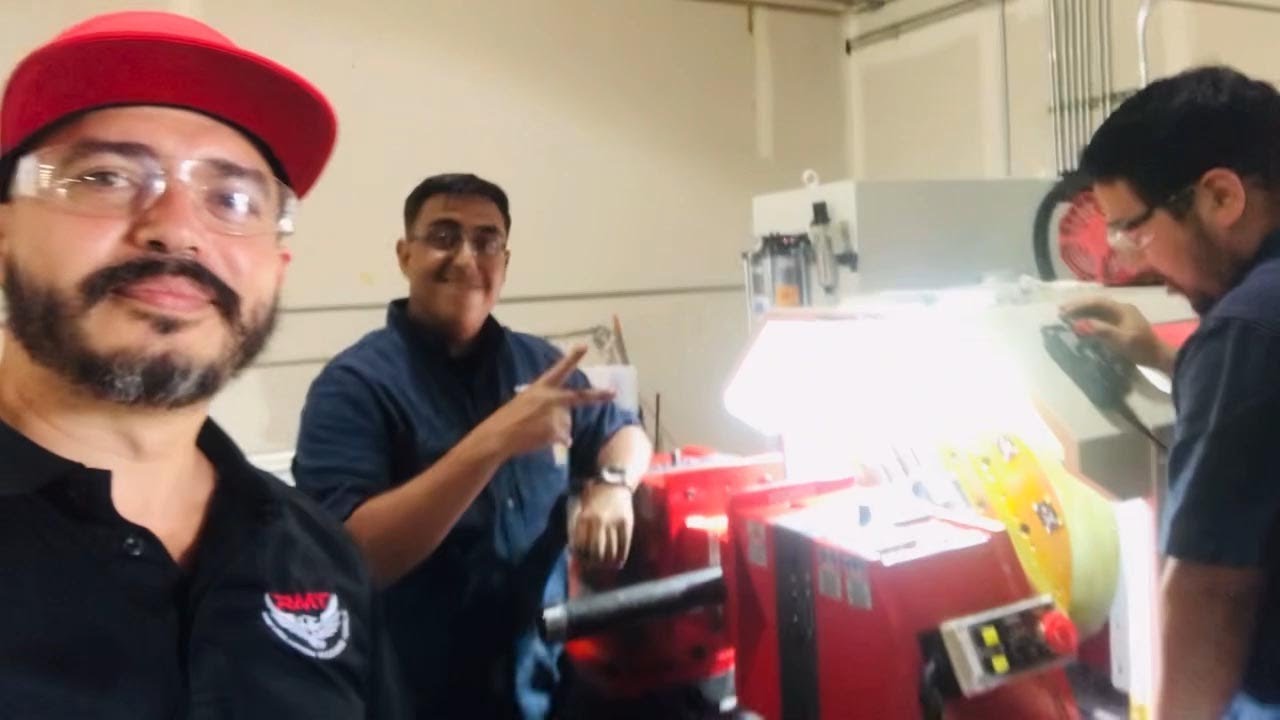
SME Steel in South Jordan, Utah is a proud owner of an RMT Press Brake and Shear. RMT was able to train the SME workforce to operate the machinery, thus saving money and expanding the skills set of its workers. www.RMTUS.com
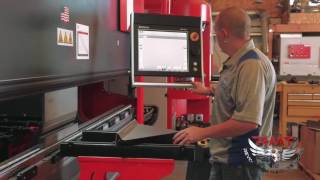
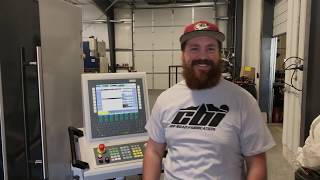
DELEM DAC Controls use top of the line technology, now programming cuts can be easily done. The interface uses clean simple layouts so that navigating the control isn't a complete nightmare for operators.
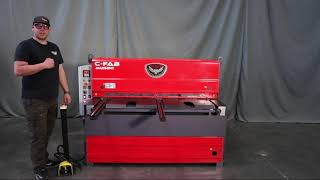
New RMT Shears are all equipped with these Delem Dac CNC Controls. Check out our shear line up at www.RMTUS.com
Testimonial for the B-GENIUS Revolution Machine Tools Press Brake Finn Kool - Kansas
We take pride in every machine we sell. It makes us extremely happy when our customers do also 🙂
These Press Brakes feature a servo driven back-gauge system for faster speeds and better accuracy. The automatic CNC crowning system improves part quality. A 3D-capable Graphical Control Unit simulates bending sequences and detects collision points before you begin the bend. B-GENIUS Press Brakes have exceptionally large strokes, huge daylight, and throat depths to accommodate deep bending and long tooling.
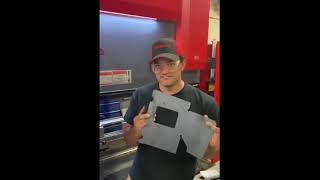
Another satisfied customer! We just delivered an RMT B-Genius 12-150 to Cypress Metals (Utah) who has been using press brakes for nearly two decades. They exclaimed at the ease of use, the precision, the versatility and the speed of the machine.
The main operator told us that this machine is, “hands down, the best machine I have ever used!” We are proud of our machines and how we are helping our customers grow their businesses!
These Press Brakes feature a servo driven back-gauge system for faster speeds and better accuracy. The automatic CNC crowning system improves part quality. A 3D-capable Graphical Control Unit simulates bending sequences and detects collision points before you begin the bend. B-GENIUS Press Brakes have exceptionally large strokes, huge daylight, and throat depths to accommodate deep bending and long tooling.
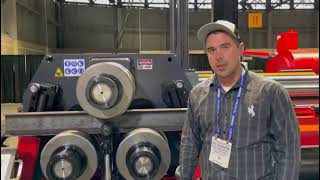
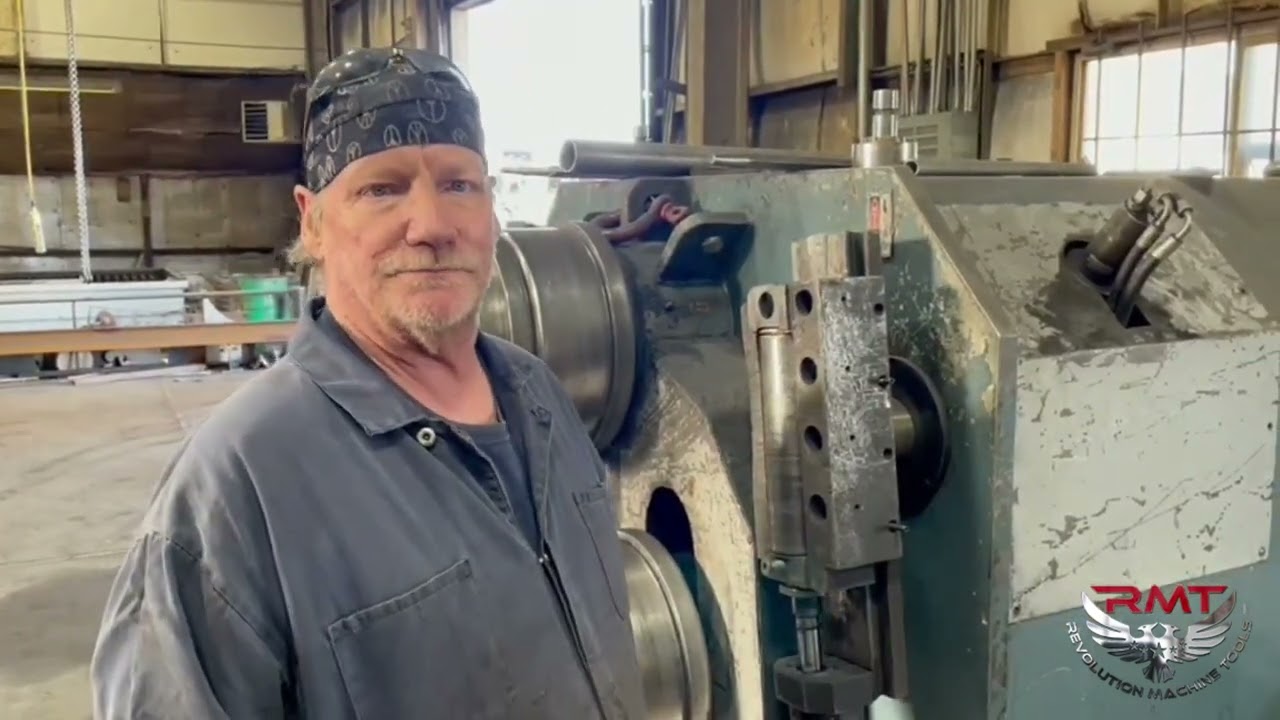
These small initial pinch rolls are designed for small part bending with low operation cost. R-ECO rolls feature robust cast iron frames, chain and gear driven drive systems and electric motors with a magnetic break which eliminates drifting. They also offer foot pedals with forward, reverse, and E-stop along with a safety wire and limit switch. A very economical, reliable, and efficient choice for your small parts needs.
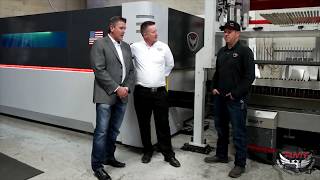
Fiber Nation a valued customer of ours gives us a testimonial on a Fiber Laser they bought from RMT years ago.
Presented by Kyle Jorgenson & Fiber Nation Executives (Anthony Evans & Dave Arbon)
Equipped with State-of-the-art technology, Fiber Lasers have become the leader in most CNC cutting applications. RMT Fiber Lasers feature unmatched cutting and travel speeds, all the while holding tolerances up to a thousandth of an inch.
For more information check out the RMT Fiber Lasers at https://rmtus.com/rmt-fiber-lasers.php
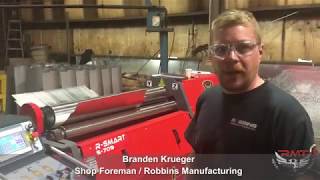
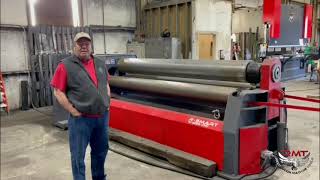
These small initial pinch rolls are designed for small part bending with low operation cost. R-ECO rolls feature robust cast iron frames, chain and gear driven drive systems and electric motors with a magnetic break which eliminates drifting. They also offer foot pedals with forward, reverse, and E-stop along with a safety wire and limit switch. A very economical, reliable, and efficient choice for your small parts needs.Learn more at https://rmtus.com/plate-rolls/
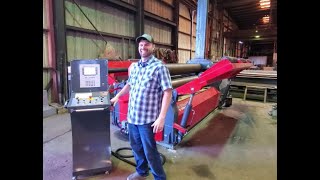
RMT R-SMART 10-866 Hydraulic 4 Rolls Plate Roll Machine - Testimonial by Absolute Metals
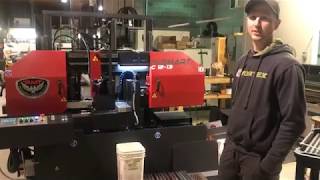
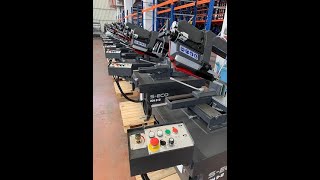
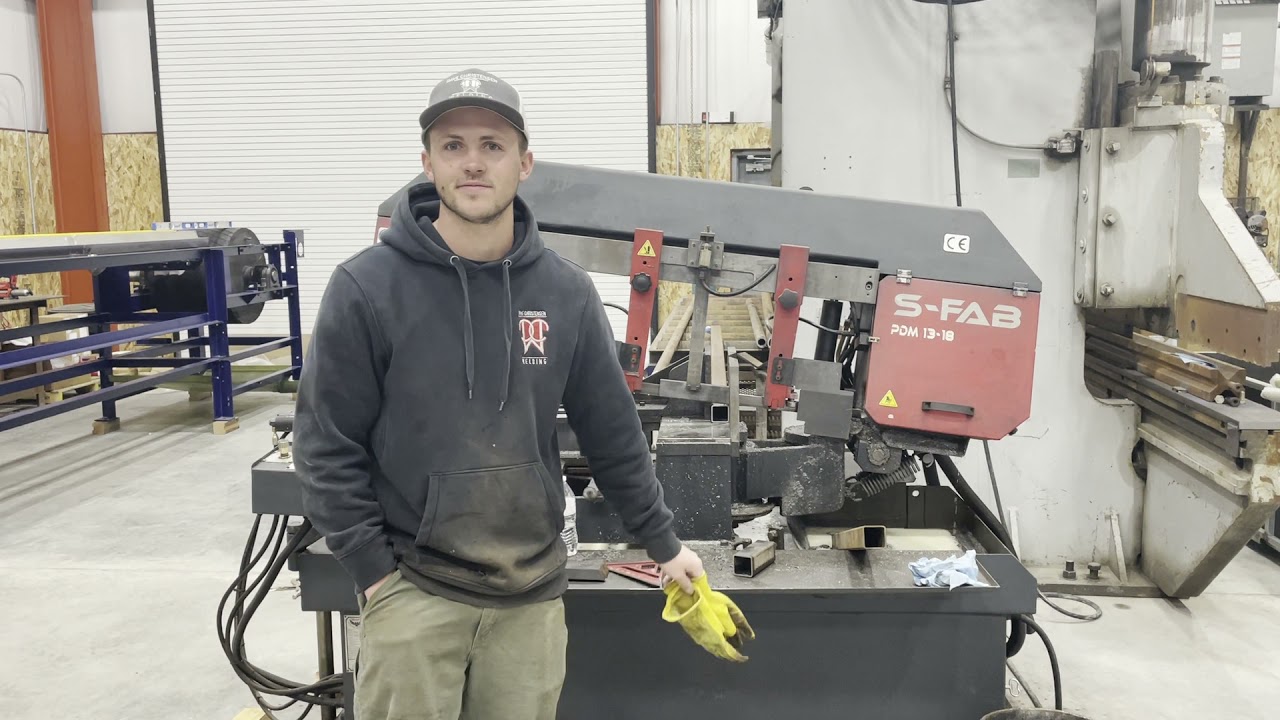
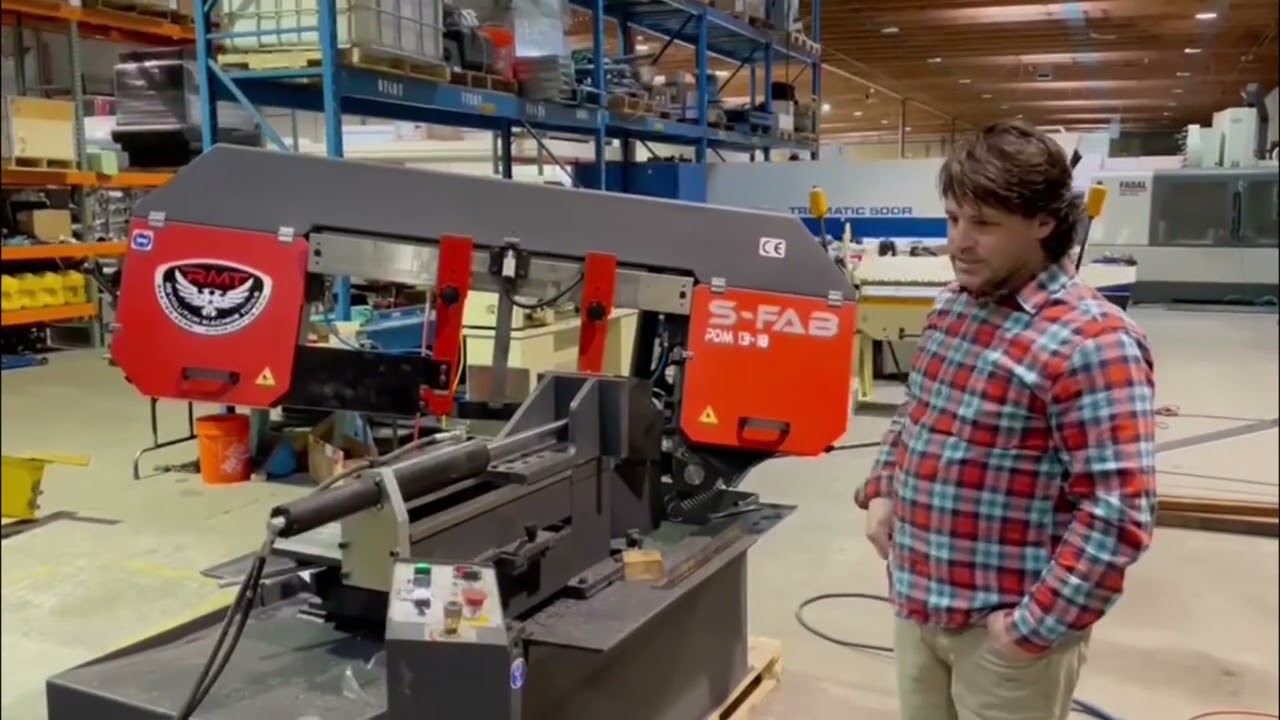
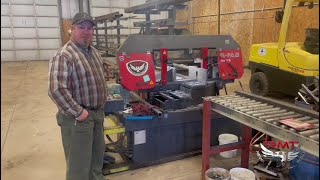
Scholzen a valued customer of RMT, gives a brief testimonial on the S-Fab Bandsaw they purchased to make their lives easier.Scholzen Products Co. HURRICANE, UT
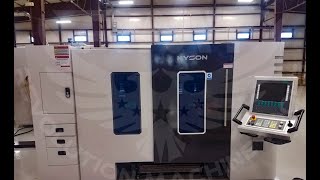
People love these KYSON Fiber Laser machines! Don't believe us? Just take a moment and watch this testimonial 🙂 Presented By: Jared (KYSON Operator)
The RMT KYSON Series Fiber Laser is our latest design with a plethora of technological enhancements. The KYSON Fiber Laser’s speed, precision, reliability, and low operating cost is legendary and second to none.
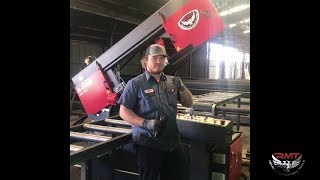
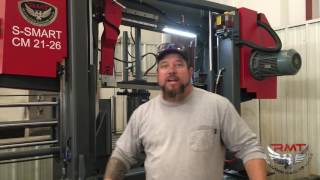
Pro Fab and Welding of Pleasant Grove, UT became the latest recipient of one of our new metal cutting band saw models. Fully automatic and loaded with features this saw makes short work of large bundles, even allowing up to a 60-degree miter. Joe, the operator for Pro Fab and Welding has been working with saws for 25 years and told us that, "This saw kicks butt" and "runs better than any saw I've ever had." He also made several comments about really wishing he had a couple of them, to which we just smiled.
RMT S-Smart Bandsaw - Pro Fab & Welding Testimonial
SME Steel in South Jordan, Utah is a proud owner of an RMT Press Brake and Shear. RMT was able to train the SME workforce to operate the machinery, thus saving money and expanding the skills set of its workers. www.RMTUS.com
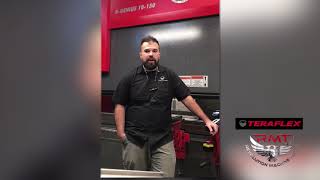
TeraFlex talks about their RMT B-Genius 10-150 Press Brake. This brake is designed and commissioned by Revolution Machine Tools and its dedicated Research and Development Team.www.RMTUS.com
"Support on it has been unreal" This is exactly what RMT like to hear! It's our goal and part of our mission to provide unparalleled support to each and every customer.
Plus Fiber Laser technology blows everybody's socks off. So check out our KYSON lineup at www.rmtus.com/rmt-fiber-lasers.php
Hammerton a valued customer of ours gives us a testimonial on a KYSON 510 3 kW Fiber Laser they bought from RMT.
Presented by Greg Paulson - Production Manager
Equipped with State-of-the-art technology, Fiber Lasers have become the leader in most CNC cutting applications. RMT Fiber Lasers feature unmatched cutting and travel speeds, all the while holding tolerances up to a thousandth of an inch.
For more information check out the RMT Fiber Lasers at https://rmtus.com/rmt-fiber-lasers.php
Here we have yet another great customer giving us great reviews! It also helps we give great prices for our machines. We're just great! But you can be too! 🙂
How do I know when my shear blades are getting dull - What to do about it
Watch for rough cuts, burrs, increased force, noise, or visible wear as signs of dull blades. Sharpen or replace them promptly to maintain cut quality, protect your machine, and avoid production delays.
How do I understand the difference between a hydraulic shear and a mechanical shear?
Choosing the right shear depends on material type, production volume, and cutting precision. Hydraulic and mechanical shears use different mechanisms to cut material, each with distinct advantages.
1. Mechanical Shears
Use a flywheel and crank system to generate cutting force.
Best for: Thin-to-medium sheet metal and high-speed, repetitive cutting.
Pros:
Fast cutting cycles.
Lower operating costs for lighter materials.
Cons:
Less flexibility for varying material thicknesses.
Cutting force is fixed; may not handle very thick or hard metals efficiently.
2. Hydraulic Shears
Use hydraulic cylinders to apply force along the blade.
Best for: Thick, hard materials and precise, controlled cuts.
Pros:
Adjustable cutting force for different materials.
Smoother, more precise cuts with less burr.
Can handle heavier plate thicknesses.
Cons:
Slower cycle times than mechanical shears for light materials.
Higher initial cost and some maintenance for hydraulic systems.
3. How to Choose
For high-speed production of thin sheets, a mechanical shear is ideal.
For precision cutting, thicker materials, or mixed material types, a hydraulic shear is better.
Consider material hardness, thickness, production volume, and budget when deciding.
In short: Mechanical shears: fast, economical, best for thin, consistent material. Hydraulic shears: adjustable, precise, can handle thicker or tougher metals. Selecting the right type ensures better cut quality, longer blade life, and safer operation.
What material thicknesses can RMT shears handle?
RMT shears are available in a variety of sizes to handle thin sheets up to heavy plate. Capacity depends on the shear model, blade length, and whether it is hydraulic or mechanical. Always check the machine specifications for maximum thickness by material type to ensure safe, clean cuts.
How do I maintain proper blade clearance on my shear?
Proper blade clearance ensures clean cuts and extends blade life.
Clearance depends on material thickness and type.
Too small: blades may bind or chip.
Too large: leaves burrs or uneven cuts.
Adjust clearance using the manufacturer’s recommended chart for your material, and check regularly during production.
What safety features come standard on RMT shears?
RMT shears include multiple safety features:
Light curtains or safety guards to prevent hand access to the cutting area.
Emergency stop buttons for immediate shutdown.
Overload protection to prevent machine or blade damage.
Operator training and manuals ensure proper and safe operation.
These features, combined with proper PPE, create a safe working environment.
How do I choose the right shear for my shop’s production needs?
Consider:
Material type and thickness – thicker or harder metals require hydraulic models.
Production volume – high-volume shops may prefer fast, mechanical shears; mixed or thick materials may benefit from hydraulic precision.
Cut length – match the blade length to your largest workpieces.
Accuracy and tolerance requirements – hydraulic shears often provide more precise, consistent cuts.
Can RMT shears cut hardened or specialty metals?
Yes, but capacity depends on the shear model and blade material.
For hardened metals like stainless or high-strength alloys, RMT recommends hydraulic shears with hardened blades.
Always confirm that the shear tonnage and blade type match the material to ensure safe, clean cuts.
How often should I inspect or replace shear blades?
Daily/weekly: Inspect for chips, nicks, or burrs. Check blade alignment and sharpness.
Monthly/quarterly: Verify blade clearance and overall condition.
Replace or sharpen blades when:
Cuts become rough or uneven Excessive burrs appear