
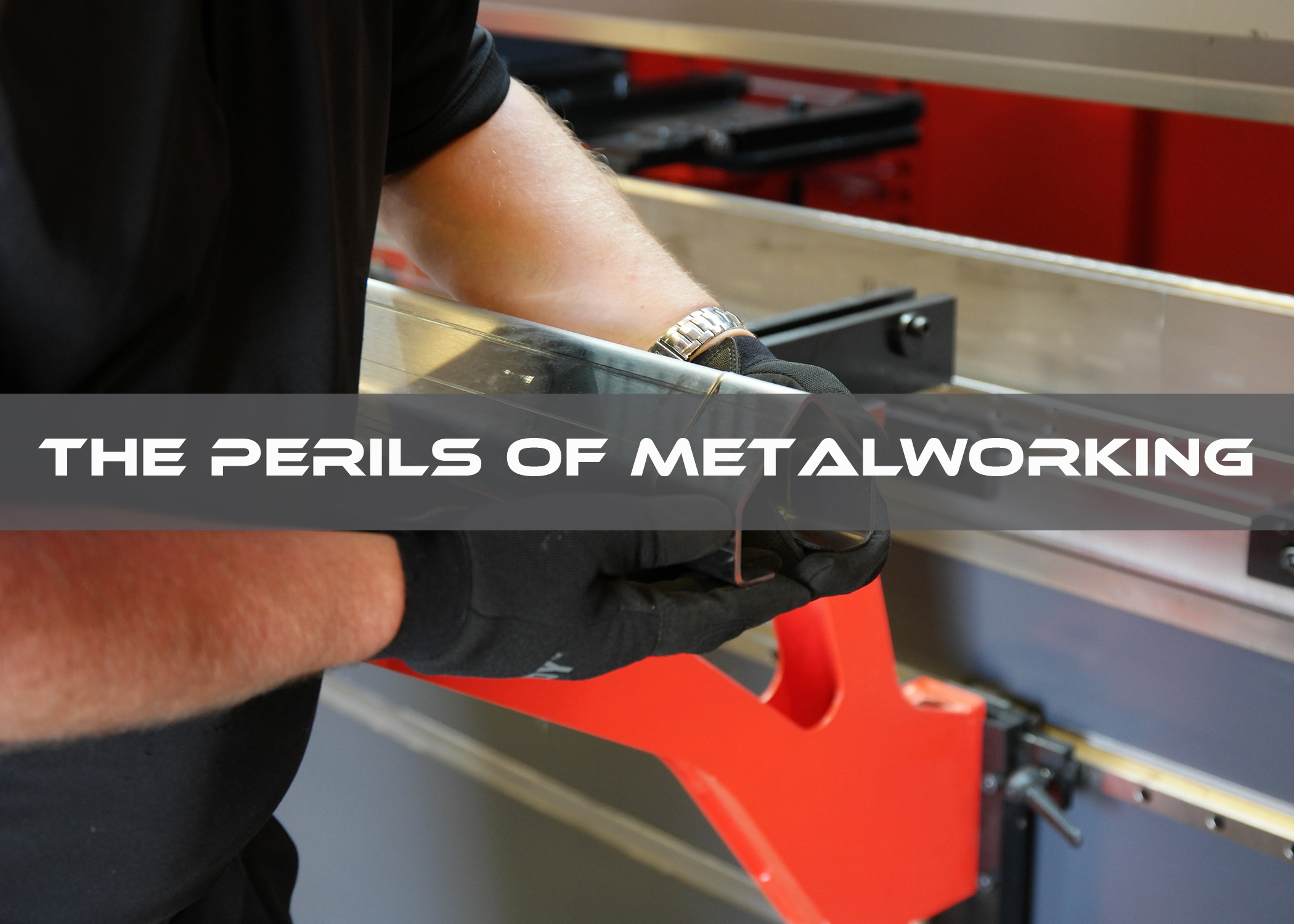
Metal fabrication, machining, and other types of metalworking can create hazards for those who perform them. This is why the topic of safety is brought up so often in the industry, from the proper use of personal protective equipment to the importance of not taking shortcuts when following a set procedure.
Recently in the “Metal Fabrication Tips” social media group, a member who was just getting into metalworking as a hobby asked, “What is the most dangerous, scary situation some of you found yourself into while working with metals?”
He went on to add an experience from his own family: “My son-in-law while grinding was covered from head to toes besides for one inch exposed on his ankle. A piece of metal decided to hit him there almost severing tendons. He had to go to ER. He is fine but still feels it here and there.”
He received dozens of replies—some with photos of injuries or scars—including the following.
The Devil Grinder
It appeared that most of the comments referred to various types of grinders and the risks they can pose. Here are some:
“Innocent looking grinders are actually the devil. If they’re not exploding cutting discs, then they’re trying to eat a part of your body, or catapult parts at light speed across your shop.”
“A grinder is not a beginner tool, obviously, but first lesson in anything fabrication is safety first. Especially with rotary tools. A grinder can take off just about anything, lodge anything anywhere, scalp you and skin you without safety gear.”
“A grinding wheel exploded without a guard on the grinder. Hit my chest punctured my lung.”
“I’ve had three accidents with a grinder, and all three happened when a coworker decided to trip on the cord and pulled it into me. Left upper arm, right shoulder, and right hand between my forefinger and middle finger. (I can’t shoot the finger because the other goes where it goes now.)”
“Groin protection is a good idea… had a friend using a grinder with metal cutoff wheel come apart and hit him in that area. Needless to say, he wished he had something covering that area.”
“Stay out of the rotational axis of the disc at all times, especially when not using a guard. I will put a guard on for cutoff operations, if I can fit the grinder in the space with it. Otherwise wear your leather gloves, heavy clothing, face shield AND safety glasses.
Operator use of the grinder makes a huge difference to safety and takes some time and practice to learn. The amount of pressure applied, holding the grinder straight and steady, etc., all combine to a safety factor in the shop. Don’t be dumb, respect that 13,000-rpm gyroscope the same way you would a firearm.”
“Angle grinders are the most dangerous tool you will use in a regular shop! People treat them very poorly and do not respect them at all. I swear 80% of guys take the guards off first thing, and there are plenty of examples of how vicious an angle grinder can be in about 1/10 of a second.”
“I was using a thick bristle wire cup on an angle grinder once. Common to have the 2″ bristles fly off and stick in your arm or clothes, etc. Anyway, I was working away and felt like someone flicked me in the ____. A bristle flew off went completely through my jeans, through my boxers and into my right ____!!! Only the end of the bristle was showing. The wife had to pull it out. Little blood and an achy ____ for a while but more scary than anything. (Had three kids since then, so still works.)”
Near Misses
Fortunately, some of the stories were of things that could have gotten much worse:
“I was removing a skin off a dozer blade. I was reminded that it might be under tension, by cutting that last little remains [of a] weld. It sprung out and missed my head by what felt like less than an inch.”
“Worst I’ve seen in person is a piece of flatware getting caught on a drill press. Not long enough to catch the post so it just helicoptered until someone unplugged the machine.”
“I left a chuck key in my lathe once. Turned it on and it went across the garage through the open windows of my MKIV Supra (missing everything!) and landed on a work bench on the other side. Never ever did that again.”
“Hanging over the edge of a 6-story building on a swing stage when a 5.8 earthquake decided to happen.”
“I was torching some diaphragms under a bridge we were demoing. Someone up top decided to start saw cutting the concrete deck above my head. 6′ blade came through the deck dumping water right above me and almost split my head in two. I fell backwards and ran up top saying, as you can imagine, some not nice things.”
A Hot Time
Flame and molten metal have caused some scares and injuries:
“Major fire on a jet saw run on paraffin (as a cutting fluid and lube). It went up and kept on burning.”
“Setting fire to 5kg of titanium swarf when taking a fine cut. Titanium is a reactive metal and will ignite under the right (perfect storm) conditions. Metal fires are scary.”
“Welding a hot tanker with cracked bulkheads and having a fireball blow around me, glad to have my hood protect my head. I’ve been on fire hundreds of times.”
“Keep the working area clear of flammable items. I once managed to stick the welding rod to the metal. No drama. Gave it a wiggle and tug until it came off only for the tip to touch a spray can of glue which burnt a hole straight through, ignited and fired an 8-foot jet of flame and glue across the shop.”
“I had red hot slag fall into a small hole in the tongue of my work boot. By the time I got my boot off it had burned tiny holes all over my foot. Now I make sure the pants cover that when I’m torching off parts.”
“I was working for a heat treat company in maintenance that had combo rayon nylon uniforms. I was up on a ladder cutting off hooks with an oxy acetylene torch. My pants leg caught on fire from my ankle to my knee. The flames were up past my belt buckle. I padded the flames out which mashed molten plastic into the burn. I spent an hour and a half picking plastic out of the wound in the lunchroom. I still have scars from that that won’t grow hair.”
“Welding under a vehicle, overhead, laid on my back. Created too large a puddle. It dropped and was too much for the protective clothing I had. Because of the restricted space, I was slow to get out from under there. By the time I got out, the molten steel had burnt through every layer and embedded itself in my chest. I invested in good quality welders clothing, risk asses every job, and still regularly think about all the other parts of my body where that blob of metal might have landed.”
A Variety of Injuries
The respondents cataloged a variety of accidents, from minor injuries to severe wounds, and even death:
“My lathe pulled my sleeve off, numerous grinder scars on my hand.” (He included a photo.)
“Had a 200kg hydraulic ram slip out of the sling and land on my foot, broke my toe verry badly.”
“Metal in my eye, long term tho I’d have to say it’s the permanent lung damage from cutting and welding on galvanized metal in high school. I’ve also seen where people transport their tanks incorrectly and the valve broke in an accident sending the tank through the cab like a missile.”
“I was a Forman at a welding facility and had to deal with multiple eye injuries such as slag stuck to an eyeball, and the craziest was a guy was using a sanding disc table to smooth the edges on a small piece of steel and it got sucked into the sander along with his fingers, and hit him in the mouth breaking teeth and ripping his lips apart. I had to rush him to the hospital in my ol’ 64 Chevy hotrod panel truck. He was out of work for about a month or so.”
“Welding rays give you cancer, one man wrote, including a photo of the tumors on his face. “Just had chemo, having tumours removed on Wednesday with reconstruction.”
“I’ve seen a colleague take off the ends of both thumbs at once on a press brake. My best tip for you is ‘don’t put your finger where you wouldn’t put your ____!’”
“Grinder disk broke. 13 stitches in the chin.” (He included a photo.)
“I don’t even wear safety glasses… and yes, I’m LITERALLY typing this from a chair at an optometry office after getting metal pulled out of my eye.”
“Chop saw blade blew up in mine and a coworker’s face, both were wearing face shields, and had gnarly bruises on our arms and chest.”
By far the most harrowing example shared had to be this one: “Watched a man’s coat get tangled in a very large lathe while I worked as a machinist. It grabbed his coat and turned him over and over and over the chuck while knocking his head, arms and leg off.” He was asked, “So he got dismembered?” He replied, “Unfortunately. I’ve never seen such a horrific thing. It was his scream that I will always remember.”
Safety Suggestions from Experienced Metalworkers
Along with all the tales of misadventure, many members of the group shared counsel drawn from their years of experience in the industry to help prevent such mishaps:
“Like any activity there are hazards. Before starting anything, think of what could go wrong. If you are aware of the danger, you can work with it.”
“Nothing will ever replace situational awareness and common sense. It sounds easy to not stick your face in the sparks but sometimes you’re trying to see what’s going on and you don’t think about it. There’s inherent risk in grinding anything, that’s why they come with a guard, and all of us know that, but we take it off anyway. It’s like an unspoken contract to be aware of what you’re doing and if you get beat up you were PROBABLY (not definitely but usually) using the tool wrong.”
“Protection is cheaper than ER visits.”
“Start with safety clothing.”
“Proper eye protection is number one, can’t stress that enough, followed by fresh air/respirator.”
“Always wear certified glasses under welding helmet and full-face shield for grinding.”
“Safety goggles instead of safety glasses. Thank me later. No more trash in my eyes from a grinder.”
“Earplugs while welding, don’t want a weld berry piercing your eardrum.”
“I have a pair of cut-proof gloves. I find sharp edges pretty dangerous. I do however think eye protection should always be used and the biggest danger.”
“I wear sturdy work shoes with safety toes, preferably all leather as it doesn’t melt or burn readily.”
“Never weld after using brake cleaner containing tetrachloroethylene. You will die.”
“If you have no experience at all, it would be a good idea to sign up for a short course to pick up the basics—nothing expensive but likely run by someone with the time to cover the main risks and techniques.”
“Do a TAFE or other course that does tool safety as well as welding course will save you lot of wasted time and handle tools safely.”
“Grinders are just the start and if that’s where you are unsure of yourself at all, you need to get a good education before going forward. It’s the stuff you don’t think about that will get you every time, something as simple as welding on a patch panel of a car, chemicals and fuel will ignite, how many guys start cutting a barrel or tank and blow themselves up.”
“Take your time, understand your PPE, understand your work, and your tools… fixture your work (vise, vise grips, quick clamps, bolt it down).”
“THE #1 RULE: KNOW HOW TO OPERATE YOUR MACHINERY AND TOOLS! If I could shout it any louder I would! #1 includes know the potential dangers! #2: maintain your tools! Especially high speed or high-power equipment. Hint: ALL equipment involved in metal working is high-power and speed. So, my best advice is to go slow until you get experience. Watch YouTube if you don’t have anyone to mentor you.”
Safety First
Shop safety shouldn’t be a difficult thing. Wearing protective gear, being patient, following procedures, being situationally aware—all lead to a safe, productive metalworking experience. Metal fabrication and machining are rewarding careers, not to mention necessary ones to sustain the forward momentum of modern industry. Keeping safety first and foremost on their minds will help metalworkers prosper in their chosen professions. They just need to always remember, as one respondent in the social media group put it: “Everything in the welding and fabrication world is hot, sharp, heavy, dirty, and wants to kill you. It’s up to you to keep it from succeeding.”