
A forging air hammer is a mechanical forging machine that uses pneumatic force (compressed air) to deliver repeated blows to a workpiece. These machines play a crucial role in modern and traditional metalworking industries by enabling smiths and manufacturers to shape heated metal efficiently and consistently. From small blacksmith workshops to large industrial forging facilities, forging air hammers remain indispensable tools for shaping steel, iron, and other metals.
Working Principle of Forging Air Hammers
The fundamental purpose of a pneumatic forging hammer is to apply rapid, controlled impacts to metal while it is heated to a malleable temperature. The machine consists primarily of a frame, an anvil, a ram (or hammer head), a piston, and an air cylinder. Compressed air drives the piston within the cylinder, causing the ram to move up and down at high speed. Each downward motion delivers a powerful strike onto the workpiece placed on the anvil.
When the operator activates the air hammer using a foot pedal or control lever, compressed air enters the cylinder and pushes the piston upward. The piston then returns downward under controlled air pressure, gravity, or a combination of both. This cycle repeats rapidly, producing consistent forging blows that shape the metal according to the smith’s intentions. Compared to manual hammering, pneumatic forging hammers greatly increase productivity and reduce physical strain on the operator.
Types of Power Forging Hammers
Forging hammers can be categorized based on their design, power source, and application. The most common types include:
- Self-contained air hammers. These machines generate their own compressed air through an integrated crankshaft and piston system. The motor drives a crank that compresses air inside the cylinder, eliminating the need for an external compressor. Self-contained air hammers are commonly used in blacksmith shops because of their compact design and relatively simple installation.
- Air compressor-powered hammers. Some pneumatic forging hammers rely on external air compressors to supply pressurized air. These systems provide more flexibility in controlling hammer speed and power, making them suitable for specialized forging operations.
- Mechanical power hammers. While technically different from pneumatic systems, mechanical power hammers are often grouped under the same category because they serve the same forging purpose. They typically use springs, belts, or cams driven by electric motors to create a repeated hammering motion.
Advantages of Forging Air Hammers
One of the most significant advantages of pneumatically powered forging hammers is their ability to deliver rapid and consistent blows. This capability allows metalworkers to forge complex shapes more efficiently than with manual tools. The operator can adjust the intensity and frequency of strikes, giving precise control over the shaping process.
Another major benefit is reduced operator fatigue. Traditional forging with hand hammers requires substantial physical effort and limits productivity. Air hammers automate the striking motion, allowing the smith to focus on positioning and manipulating the workpiece.
Additionally, forging air hammers provide improved forging accuracy. Because the ram travels in a fixed vertical path, each strike is consistent in location and force. This precision is particularly important in industrial forging processes where uniformity is essential.
Applications of Forging Air Hammers
Forging air hammers are used across a wide range of industries and crafts. In blacksmithing, they help artisans shape knives, tools, decorative ironwork, and custom metal components. The hammer’s rapid blows allow smiths to draw out metal, flatten stock, and perform various forging techniques with greater speed.
In industrial settings, pneumatic forging hammers are used to manufacture automotive components, agricultural equipment parts, hardware, and construction materials. These machines can shape high-strength metals that would be difficult or impossible to form manually.
They are also used in toolmaking, where precision forging is required to produce durable tools such as chisels, axes, and hammers. By controlling the striking force and rhythm, manufacturers can ensure consistent product quality.
Safety Considerations for Forging Air Hammers
Operating a forging air hammer requires proper safety precautions. Because the machine delivers powerful blows, operators must keep their hands clear of the striking area and use appropriate tongs to hold hot metal. Protective equipment such as safety glasses, gloves, and hearing protection is also essential.
Regular maintenance is equally important. Components such as air valves, pistons, and guides must be inspected and lubricated to ensure smooth operation. Proper maintenance not only prolongs the life of the equipment but also prevents accidents caused by mechanical failure.
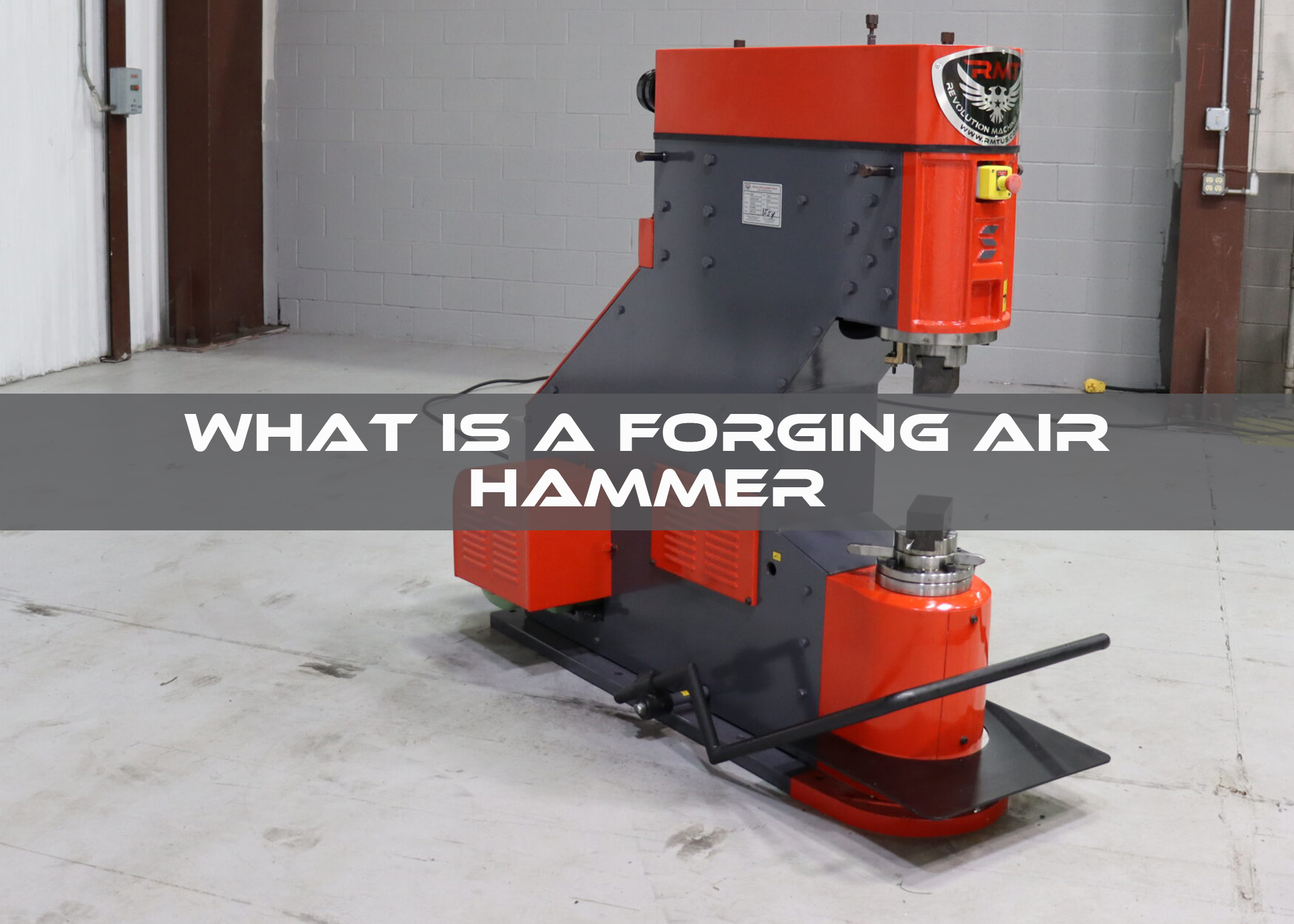
Example of a Forging Air Hammer: RMT’s FH-FAB™ 130
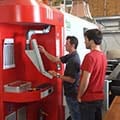
One pneumatic forging hammer on the market is the FH-FAB™ 130 Forging Air Hammer from Revolution Machine Tools. This powerful blacksmithing tool is essential for precise, repeat performance in high quantity production of steel items in facilities large and small.
RMT’s machine is designed to accommodate two common types of forging applications:
- Flat Die Forging. An open die process that uses flat, unenclosed dies to shape large, simple components like shafts and rings in lower volumes.
- Drop Forging. An efficient closed die operation that provides tighter tolerances for parts that require detailed, precise shapes, such as connecting rods and crankshafts.
This air hammer’s hefty ram delivers a consistent, high-pressure force to each workpiece (up to 240 blows per minute), while the compact design gives the machine a smaller footprint ideal for any size forging shop. It features a sturdy welded steel construction and an efficient oiling system to keep it running smoothly. The sal block (the holder that connects the dies to the ram) is adjustable, allowing the operator to modify the working angle of the die for precise forging.
Forging Ahead with Air Hammers
The forging air hammer represents a significant advancement in metalworking technology. By harnessing compressed air, these machines transform the labor-intensive process of forging into a faster, more efficient operation. Whether used in artisan blacksmith shops or large-scale manufacturing plants, pneumatic forging hammers continue to play a vital role in shaping the metal tools and components that support modern industry.