
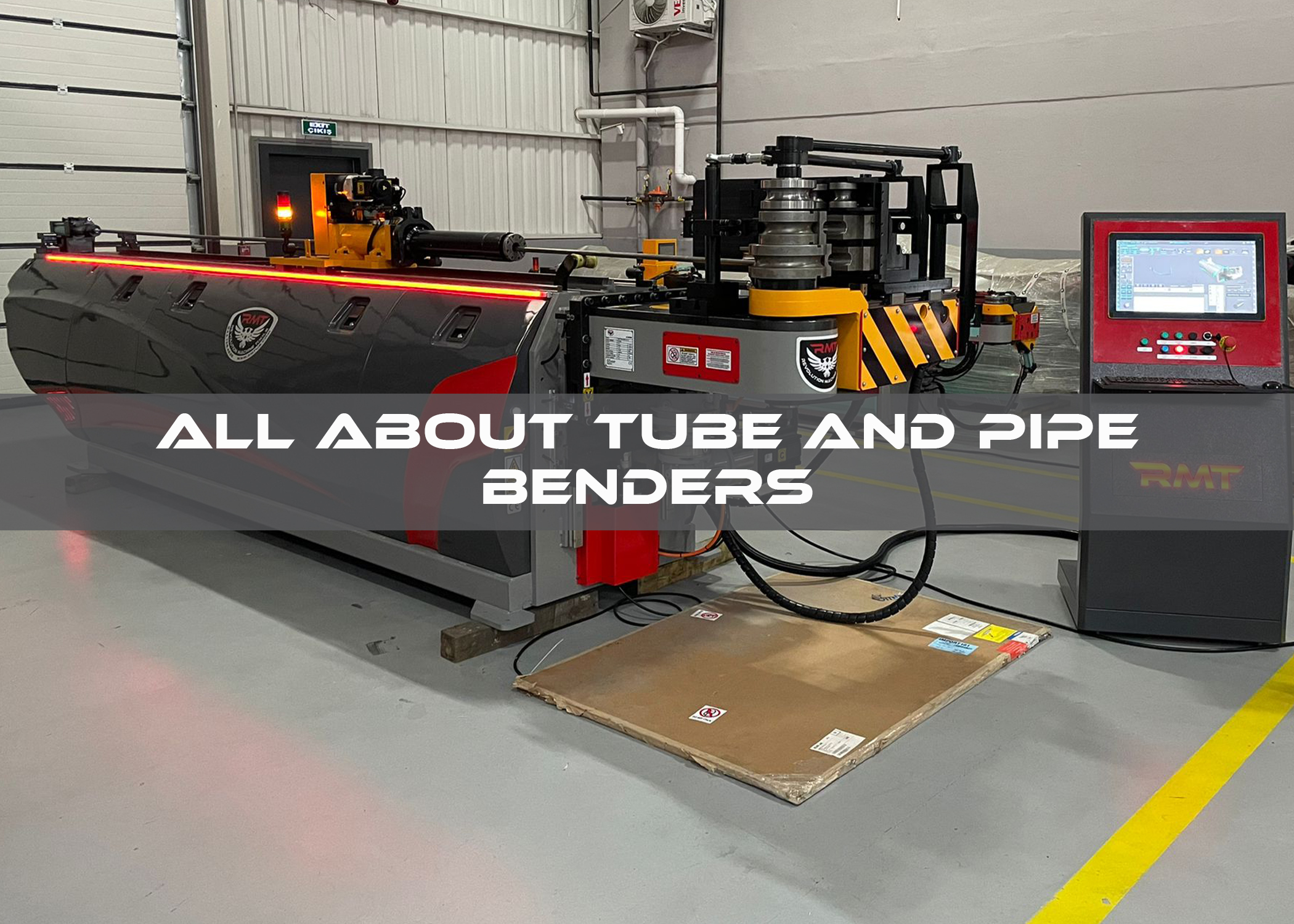
Tube and pipe bending is a foundational process in modern manufacturing, enabling the creation of everything from automotive exhaust systems to aerospace tubing and structural frameworks. While often overlooked, the technology behind bending metal tubes has evolved from simple manual methods into highly sophisticated, computer-controlled systems capable of producing complex geometries with remarkable precision. Understanding this evolution provides valuable context for today’s advanced solutions.
The Origins of Tube and Pipe Benders
The use of pipes dates back thousands of years. Ancient civilizations such as the Egyptians and Romans used copper and lead piping systems to transport water, but shaping these pipes was a relatively crude process. Early methods relied on fittings—such as elbows and joints—to redirect flow rather than bending the pipe itself.
True tube bending technology began to emerge in the early 20th century. By the 1930s, conduit benders allowed electricians and builders to shape pipes more efficiently, and by the 1940s and 1950s, rotary draw benders and dedicated pipe-bending machines were widely used in industries like furniture and bicycle manufacturing.
The shift from fittings to bending was significant: eliminating joints reduced the risk of leaks, improved structural integrity, and lowered production costs. This marked the beginning of tube bending as a core industrial process.
The Science Behind Bending
At its core, tube bending is a deceptively complex operation. When a tube is bent, the outer wall experiences tensile stress while the inner wall undergoes compression. This imbalance can lead to defects such as thinning, wrinkling, or ovalization if not properly controlled.
Modern bending machines address these challenges using specialized tooling. A typical setup includes a forming die, pressure die, and often a mandrel inserted inside the tube to maintain its shape during bending.
Different bending methods have emerged to suit various applications:
- Rotary draw bending for high-precision parts.
- Roll bending for large-radius curves.
- Induction bending for heavy industrial pipelines.
- Push bending for complex, multi-radius geometries.
Each method reflects a balance between force, control, and material behavior—factors that modern machines manage with increasing sophistication.
From Manual Tools to CNC Precision
For much of the 20th century, tube bending machines were primarily mechanical or hydraulic. While powerful, these systems required significant operator skill and were limited in repeatability.
The introduction of Computer Numerical Control (CNC) transformed the field. CNC tube benders allow operators to program precise bend angles, radii, and sequences, enabling consistent production of complex parts. Multi-axis control further expanded capabilities, allowing three-dimensional bending with minimal human intervention.
Today’s machines often combine hydraulic force (for raw power) with servo-electric systems (for precision and efficiency). This hybrid approach provides tight tolerances, reduced energy consumption, and improved repeatability—critical for industries like aerospace, automotive, and medical manufacturing.
The Role of Automation and Smart Manufacturing
Modern tube and pipe benders are no longer standalone machines—they are integrated into digital manufacturing ecosystems. Advanced systems feature:
- Real-time feedback sensors.
- Simulation software for bend visualization.
- Automatic lubrication and cooling systems.
- Integration with CAD/CAM and ERP platforms.
These innovations allow manufacturers to simulate bends before production, minimize waste, and achieve near-zero defect rates. In many cases, operators simply input a desired geometry, and the machine determines the optimal bending process automatically.
This shift toward intelligent, adaptive machinery represents the cutting edge of metal fabrication.
Spotlight: The RMT TPB-SERVO™ Series
Among the latest advancements in tube bending technology is the TPB-SERVO™ Series from Revolution Machine Tools. Designed to meet the demands of modern fabrication shops, these machines exemplify the convergence of power, precision, and automation.
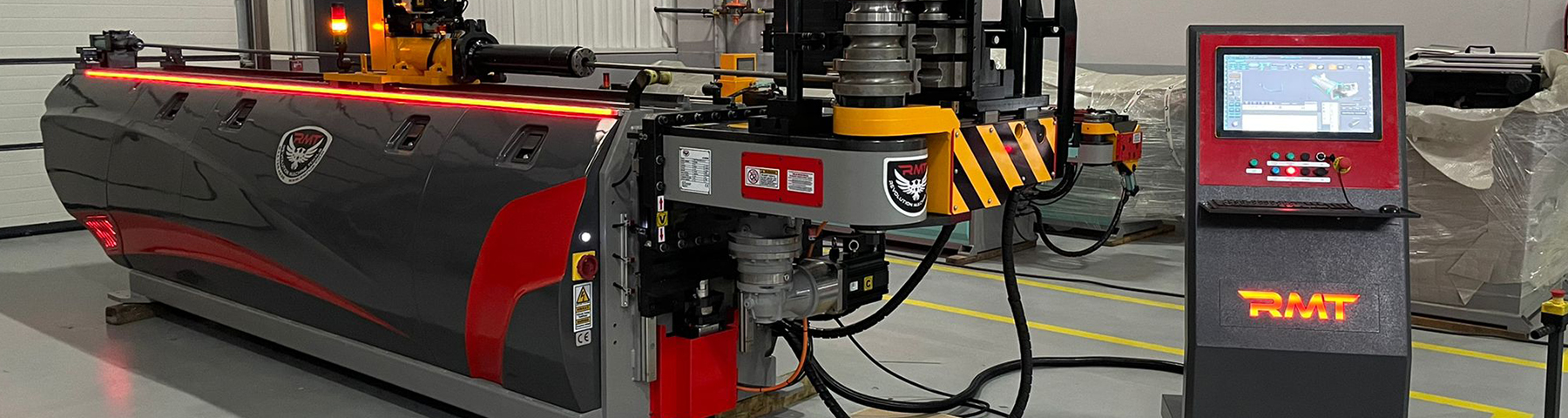
The TPB-SERVO™ Series consists of CNC tube and pipe benders that utilize five-axis servo control, enabling highly accurate and repeatable bending operations. These machines can work with a wide range of materials, including light steel, stainless steel, and aluminum.
One of the defining characteristics of the TPB-SERVO™ Series is its hybrid design. Hydraulic systems handle core mechanical functions—such as clamping and support—while servo motors provide precise control over movement and positioning. This combination ensures both strength and accuracy.
Other notable features include:
- Fully automatic operation, allowing operators to load material and initiate pre-programmed bending sequences with minimal intervention.
- Multi-step and complex bending which can produce intricate shapes through sequential operations.
- Touchscreen CNC interface on a modern control panel featuring programming tools and supporting 2D and 3D simulation so users can visualize bends before execution, reducing setup time and material waste.
- 5-axis control (Y, B, C, H, V axes) which enables advanced 3D bending capabilities.
- Automatic lubrication and cooling systems which enhance machine longevity and performance.
Key benefits of the TPB-SERVO™ Series include:
- Performance and Precision. Precision is a hallmark of the TPB-SERVO™ Series. With tolerances as tight as 0.004 inches for feeding, rotation, and bending, these machines are suitable for high-specification industries where accuracy is critical. Additionally, features like spiral bending, unlimited radius capability, and die stacking expand the range of possible geometries. Whether producing simple bends or complex multi-plane components, the TPB-SERVO machines offer exceptional versatility.
- Efficiency and Cost Savings. Automation plays a major role in the value proposition of the TPB-SERVO™ Series. By reducing manual intervention and enabling repeatable processes, these machines help manufacturers lower labor costs and increase throughput. The ability to perform complex bends in a single setup also minimizes the need for secondary operations, further improving efficiency. In high-volume production environments, these advantages translate into significant cost savings over time.
The Future of Tube and Pipe Bending
As manufacturing continues to evolve, tube and pipe bending technology is expected to become even more intelligent and autonomous. Emerging trends include:
- Integration of artificial intelligence for process optimization.
- Real-time adaptive bending based on material feedback.
- Advanced tooling produced through additive manufacturing.
- Fully connected “smart factory” environments.
Machines like the TPB-SERVO™ Series already point toward this future, combining robust mechanical engineering with digital intelligence.