
For over a century, aluminum has been a critical construction component in the aerospace industry. From the Wright brothers’ first crankcase to the sleek skins of modern commercial jets, its unique properties have made it indispensable. While composites are the “new frontier,” aluminum remains the pragmatic king of the hangar. However, working with aluminum in an aerospace context isn’t just about bending metal; it’s a high-stakes discipline where material science meets precision craftsmanship.
The Choice of Alloy: It’s All in the Chemistry
In aerospace, you don’t just use “aluminum.” You use specific alloys tailored for structural integrity. The primary players are the 2xxx series (copper-based) and the 7xxx series (zinc-based).
- 2024-T3. Known for high fracture toughness and resistance to fatigue. It is the go-to for fuselage skins where tension is a constant factor.
- 7075-T6. One of the highest-strength aluminum alloys available. It is used in high-stress areas like wing spars and internal ribs, where weight-to-strength ratios are critical.
Unlike steel, these alloys gain their strength through heat treatment and precipitation hardening. A fabricator must understand that heat is both a tool and a threat; improper welding or localized heating can “anneal” the metal, stripping away its tempered strength and leaving it soft and prone to failure.
Precision Cutting and Machining
The journey from a raw sheet to a flight-ready component begins with cutting. In aerospace, standard methods are often shunned in favor of techniques that minimize Heat Affected Zones (HAZ).
- Waterjet Cutting. Waterjet is often preferred because it is a “cold” cutting process. By using a high-pressure stream of water mixed with garnet abrasive, fabricators can cut complex shapes without altering the metal’s molecular structure.
- CNC Milling. For “hog-outs”—parts machined from a solid block of aluminum—high-speed CNC machines are used. The challenge here is residual stress. Aluminum has a “memory.” When you remove large amounts of material from one side of a block, the internal stresses can cause the part to warp or “potato chip.” Skilled fabricators use balanced machining sequences to keep the part flat.
What About Laser Cutting Aerospace Aluminum?
In recent years, fiber lasers have transitioned from a niche technology to a mainstay in aerospace fabrication. While CO₂ lasers often struggled with aluminum due to the metal’s high reflectivity, fiber lasers operate at a wavelength—typically around 1.07 microns—that aluminum absorbs much more efficiently.
To utilize fiber lasers safely and effectively for aerospace-grade components, fabricators must focus on three core pillars: beam management, gas dynamics, and thermal control.
- Managing Reflectivity and Back-Reflection. Aluminum’s “shiny” nature is a safety hazard for the machine itself. In the early stages of a cut, the laser can reflect off the surface and travel back into the optics, potentially destroying the laser source. Fortunately, modern fiber lasers use “optical isolators” and “back-reflection sensors” that automatically shut the system down if a dangerous reflection is detected. (Efficiency Tip: To maximize absorption, use a “pierce” technique that utilizes high peak power to break the surface tension and reflectivity of the aluminum as quickly as possible.)
- Assist Gas Selection: Nitrogen vs. Oxygen. The choice of assist gas defines the quality of the edge. Nitrogen (high pressure) is the industry standard for aerospace. Nitrogen acts as a mechanical force to blow the molten metal out of the kerf without causing an exothermic reaction. This results in a “clean” edge with zero oxidation, which is vital for parts that require subsequent welding or bonding. While oxygen can speed up the cut in thicker plates, it creates an oxide layer on the cut edge. In aerospace, this layer is often considered a contaminant and must be mechanically removed, adding labor costs and potential for human error.
- Minimizing the Heat Affected Zone. While lasers are “hot” processes, the speed of a fiber laser is its greatest asset for precision. By moving the beam at high velocities, the heat is concentrated in a very narrow path. This minimizes the Heat Affected Zone (HAZ), ensuring that the surrounding material retains its T3 or T6 temper. For intricate geometries or sharp corners where the machine must slow down, fabricators use “pulsing” rather than a continuous wave. This reduces the total heat input into the part, preventing “melt-out” or warping of delicate aerospace ribs.
Forming: The Art of the Bend
Aluminum is remarkably ductile, but aerospace fabrication requires extreme precision. Most parts are formed using:
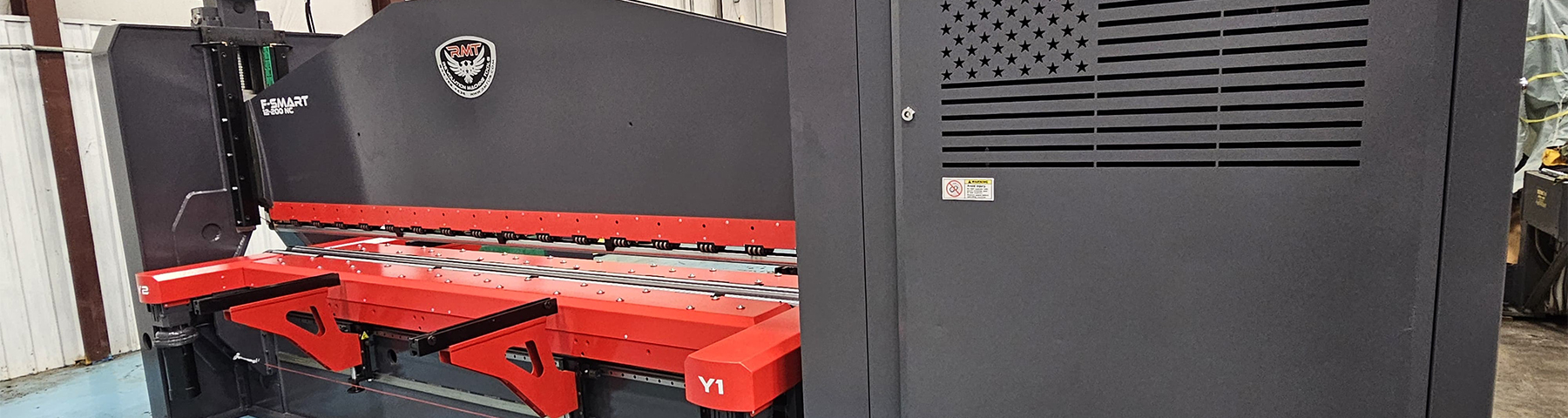
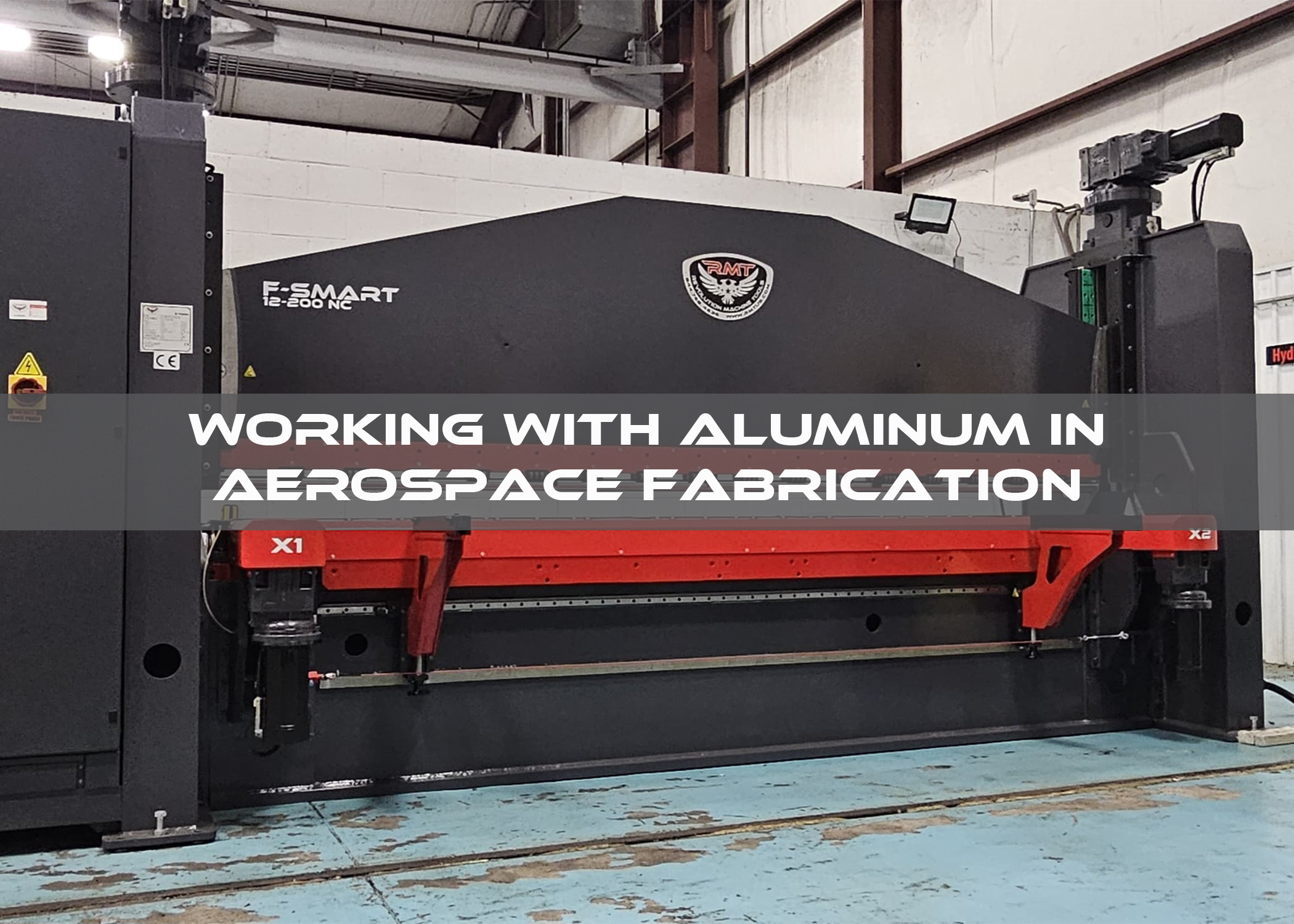
- Press Brakes, which utilize precision dies to create long, straight bends.
- Aircraft Rolls, which combine elements of a plate roll and a press brake to form the leading edges of aircraft wings, helicopter blades, and other tapered components.
- Hydroforming, a process where high-pressure fluid forces an aluminum sheet into a mold. This is ideal for complex, contoured parts like engine cowlings.
A critical concept in forming is the Minimum Bend Radius. Aluminum alloys, particularly the harder 7xxx series, will crack if bent too sharply. Fabricators must calculate the “bend allowance” and “setback” using specific formulas to ensure the final dimensions are accurate after the metal has been stretched over a radius.
The Challenge of Joining: Riveting vs. Welding
While we think of modern manufacturing as a world of lasers and welds, the aerospace industry still relies heavily on solid riveting.
- The Rivet Advantage. Many aerospace aluminum alloys are “unweldable” by traditional means because the heat of a TIG or MIG weld destroys the alloy’s tempered properties. Furthermore, aircraft structures are subject to intense vibration and thermal expansion. Riveted joints allow for a microscopic amount of “give” and are easier to inspect for fatigue cracks than welds.
- Friction Stir Welding (FSW). A revolutionary exception is Friction Stir Welding. Instead of melting the metal, a rotating tool “stirs” the aluminum together at a plasticized state. Since the metal never actually melts, it retains much of its original strength. This is increasingly used for fuel tanks in rockets and some fuselage sections.
Surface Treatments and Corrosion Prevention
Aluminum’s greatest enemy is corrosion, specifically “intergranular corrosion” and “galvanic corrosion.” Because aluminum is often paired with dissimilar metals (like steel fasteners), it can act as an anode and sacrifice itself, leading to rapid decay.
To prevent this, aerospace parts undergo several critical treatments:
- Alclading. Many aluminum sheets come with a thin layer of pure aluminum bonded to the surface. Pure aluminum is much more corrosion-resistant than the high-strength alloys it protects.
- Anodizing. An electrochemical process that thickens the natural oxide layer on the surface, creating a hard, corrosion-resistant finish.
- Chromate Conversion Coating. Often called “Alodine,” this chemical film provides a base for primers and adds a layer of chemical protection.
Quality Control and NDT
In aerospace, “good enough” doesn’t exist. Every part undergoes Non-Destructive Testing (NDT).
- Dye Penetrant Inspection. A fluorescent dye is applied to the part; it seeps into even the tiniest hairline cracks, which then glow under UV light.
- Ultrasonic Testing. Using sound waves to find internal voids or delamination within a thick plate of aluminum.
The Human Element: Craftsmanship in a Digital Age
Despite the rise of robotics, the “feel” of the metal remains vital. A master fabricator can tell by the sound of a rivet gun or the resistance of a hand-formed curve if the material is behaving correctly.
Working with aluminum in aerospace is a balance of respecting the material’s limits while pushing the boundaries of what it can do. As we move toward more efficient aircraft and the commercialization of space, the humble aluminum atom remains the most reliable passenger on the journey upward.
Whether it’s a 5-axis milled bulkhead or a hand-bucked rivet in a fuselage skin, the fabrication of aluminum is the silent language of flight. It is a discipline where a thousandth of an inch can be the difference between a successful mission and a catastrophic failure.