

Sheet metal fabrication has long been the backbone of modern manufacturing—serving industries from automotive and aerospace to construction, electronics, and renewable energy. Over the past century, advances in machinery, materials, and process design have shaped this field into a precise and high-tech industry. Yet, as we enter an era defined by digital transformation, sustainability, and global competition, the future of sheet metal fabrication promises even greater change.
From automation and artificial intelligence (AI) to smart materials and additive manufacturing, a wave of new technologies is reshaping how metal parts are designed, produced, and delivered. The companies that embrace these innovations will not only improve efficiency but redefine what’s possible in metalworking.
Automation and Robotics: The Rise of the Smart Factory
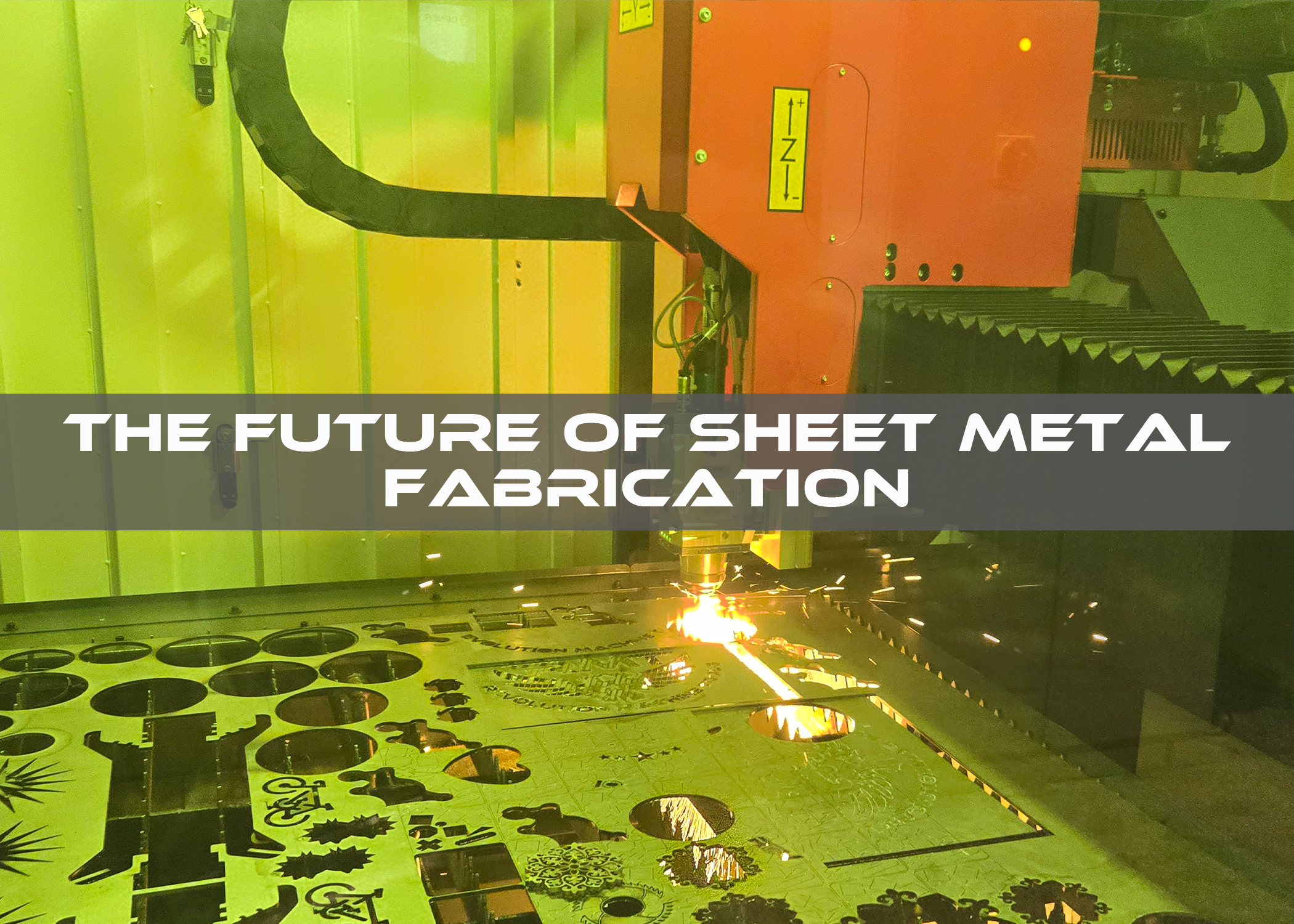
Automation is already transforming fabrication shops, but the next decade will see robotics and smart systems become fully integrated into production lines. Modern Computer Numerical Control (CNC) machinery, robotic arms, and laser-cutting systems now work together with minimal human intervention.
The latest robotic solutions can handle sheet loading, bending, welding, and inspection—all while communicating with each other through the Industrial Internet of Things (IIoT). These connected systems collect and analyze data in real-time, allowing predictive maintenance and optimization of workflows.
Collaborative robots (“cobots”) are also entering small and mid-sized fabrication shops. Unlike traditional industrial robots, cobots are designed to work alongside humans safely. They can assist in repetitive or ergonomically challenging tasks, reducing labor strain and increasing productivity without eliminating skilled jobs.
By 2035, experts predict that nearly all sheet metal fabrication facilities will use at least some form of robotic automation, integrating smart controls to improve consistency, throughput, and cost efficiency.
Artificial Intelligence and Data-Driven Manufacturing
AI and machine learning are revolutionizing how fabricators plan and manage production. AI-driven software can analyze design files and automatically generate the most efficient cutting patterns, reducing waste and optimizing material usage.
Predictive analytics, fueled by big data, helps companies forecast demand, manage inventory, and schedule machine maintenance before breakdowns occur. For example, sensors embedded in CNC machines can track vibrations, temperature, and tool wear—alerting technicians to potential issues before they disrupt operations.
AI also enhances quality control. Vision systems powered by machine learning can detect surface defects or dimensional inaccuracies with precision that exceeds human capability. In the future, these systems will likely evolve into autonomous quality management loops, where inspection results feed directly into machine adjustments, creating a self-correcting process.
The combination of automation and AI effectively turns the modern fabrication shop into a “smart factory”—a fully connected ecosystem where machines, software, and humans work together seamlessly.
Additive Manufacturing Meets Sheet Metal
While 3D printing and sheet metal fabrication were once considered separate technologies, the boundary between them is blurring. Hybrid manufacturing—combining subtractive, additive, and forming techniques—is emerging as a powerful approach.
Additive manufacturing (AM) allows the creation of complex geometries and lightweight structures that are difficult or impossible to achieve through traditional metal forming. By integrating AM into sheet metal workflows, manufacturers can produce custom brackets, joints, or reinforcement structures that perfectly complement stamped or laser-cut components.
For prototyping, this hybrid approach dramatically shortens design-to-production cycles. Engineers can print tool jigs or test parts within hours, validate them, and transition to sheet metal production with minimal downtime.
As metal 3D printing becomes faster and more cost-effective, we can expect to see it play a growing role in high-value, low-volume industries—especially aerospace, defense, and advanced electronics—where customization and precision are paramount.
Sustainability and Material Innovation
Sustainability has become a central theme across manufacturing, and sheet metal fabrication is no exception. With global emphasis on reducing carbon emissions and conserving resources, the industry is adopting greener practices at every stage of production.
Advanced nesting software reduces material waste during cutting operations, while recycling programs ensure that scrap metal re-enters the supply chain. Some facilities are investing in renewable energy sources to power their operations, further minimizing their environmental footprint.
On the material side, new alloys and coatings are being developed to extend the lifespan of components and improve corrosion resistance. Lightweight metals such as aluminum and advanced high-strength steels (AHSS) are gaining popularity due to their performance-to-weight ratio—especially in automotive and aerospace applications striving for energy efficiency.
Sustainability also influences equipment design. Manufacturers are developing machines that consume less power, use eco-friendly lubricants, and feature modular components for easier maintenance and upgrades.
Ultimately, sustainability in sheet metal fabrication isn’t just an environmental imperative—it’s becoming a competitive advantage.
Digital Twin Technology and Virtual Prototyping
Digital twin technology—creating a virtual replica of a physical asset or process—is emerging as a game-changer in fabrication. Engineers can simulate cutting, bending, or welding operations in a virtual environment, identify potential errors, and optimize setups before any material is cut.
This reduces waste, speeds up design validation, and enhances communication between design and production teams. A digital twin can also track the entire lifecycle of a component—from raw material to final assembly—providing traceability and performance insights.
As more fabrication equipment becomes IIoT-enabled, real-time data from machines can continuously update the digital twin, creating a feedback loop that refines accuracy and efficiency.
Workforce Evolution: The Human-Machine Partnership
Despite the surge in automation, humans remain central to the future of sheet metal fabrication. However, the nature of work is changing.
Future fabricators will need to blend traditional craftsmanship with digital literacy. Skills in programming CNC machines, managing robotics, and interpreting data analytics will be in high demand. Vocational programs and training initiatives are already evolving to prepare a new generation of technicians and engineers for this hybrid environment.
Rather than replacing workers, smart technologies are empowering them to make better decisions, improve precision, and focus on creative problem-solving. The future workforce will be smaller but more skilled, collaborative, and tech-savvy.
A Glimpse Ahead: Toward Fully Integrated Manufacturing
The future of sheet metal fabrication lies in total integration—where digital design, simulation, production, and logistics converge into a single intelligent ecosystem.
Imagine a system where a designer uploads a CAD model, AI algorithms optimize the geometry for material efficiency, and robotic cells automatically produce the part with zero manual intervention. The finished product is tracked through blockchain-based traceability, ensuring quality assurance and supply chain transparency.
This vision is not far off. Industry leaders are already investing in cloud-based manufacturing platforms that connect every stage of the value chain. The result will be faster production cycles, greater customization, and unprecedented flexibility.
Collaborate with a Future-Thinking Machine Tool Provider
The future of sheet metal fabrication is being forged today by the convergence these various technologies. As they mature and integrate, they will redefine how metal parts are conceived, made, and delivered.
As you move into this brave, new world of advanced fabrication, be sure to work with a dealer who understands the importance of staying on the forefront of these cutting-edge solutions and works with like-minded factories that can provide the machines that will keep you competitive in an ever-shifting market.
In this new era, success will depend on adaptability—embracing digital transformation while retaining the craftsmanship and problem-solving spirit that have always defined the industry. Sheet metal fabrication is not just evolving; it’s entering a golden age of precision, intelligence, and possibility.