
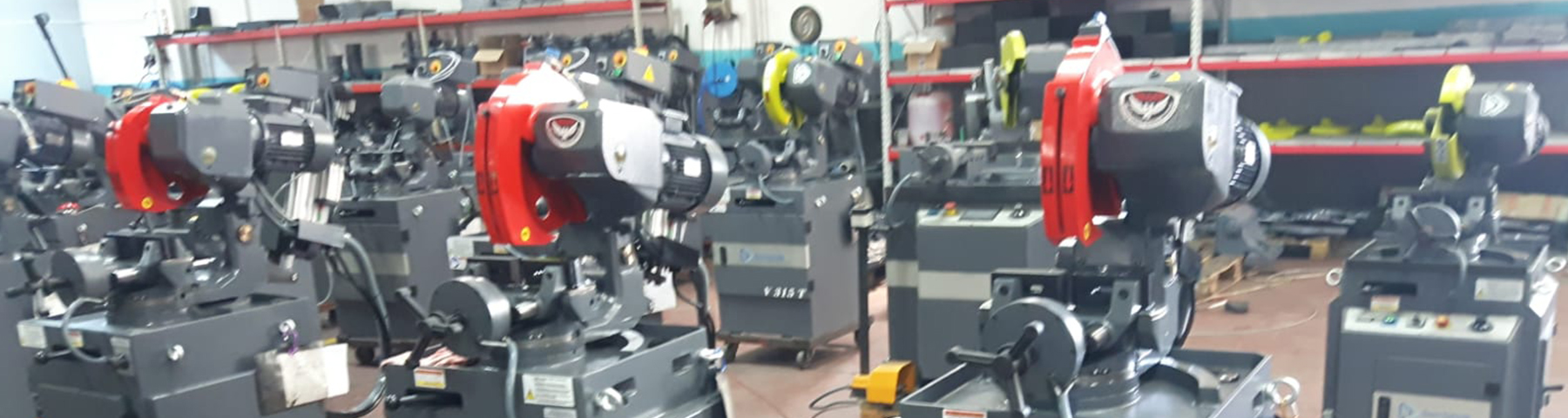

In modern factories and metal shops, workers face a constant challenge: they need to cut metal quickly, but they also need the cuts to be incredibly accurate without damaging the metal. This is where the cold saw comes in. Unlike lasers that use heat or chop saws that use fast, rough grinding wheels, the cold saw uses a thick, circular metal blade with sharp teeth. This blade spins slowly but packs a massive amount of power to cleanly slice through metal.
The machine gets its name from how it handles heat. The shape of the teeth and the
speed of the machine ensure that all the heat created by the cut goes directly into the
metal chips that fly off the machine. Because the heat leaves with the chips, both the
blade and the metal being cut stay completely cool to the touch.
Let’s look at how the cold saw was invented and why it is often the best tool for the job.
The History of the Cold Saw
Before we had modern machines, cutting metal was one of the slowest jobs in
manufacturing. During the early Industrial Revolution, workers had to use manual hand
saws, hammers, and chisels, or heat the metal up in a forge just to shape it. These
methods took a long time, were rarely accurate, and could not keep up with the global
demand for steel rails and steam engines.
Everything changed at the start of the 1900s. Two engineers, Frederick Winslow Taylor
and Maunsel White, invented a new material called High-Speed Steel (HSS). By mixing
steel with special metals like tungsten and chromium, they created a blade that could
stay sharp even when it got hot. This breakthrough allowed engineers to build the first
circular metal-cutting saws. They realized that a stiff, spinning disk with HSS teeth could
cut straighter and faster than any old-fashioned hand saw.
By the middle of the 20th century, machine builders in Europe—mostly in Germany,
Italy, and the UK—started making heavy-duty machines specifically for these circular
blades. They added powerful gearboxes to slow down electric motors, giving the
machines the slow, high-power spin they needed. These became known as “cold saws”
because they kept the metal cool. In the 1970s, builders started tipping the blade teeth
with tungsten carbide, making them even tougher. This allowed cold saws to cut harder
metals even faster, making them a must-have machine in modern shops.
How a Cold Saw Works
To understand why the cold saw is so good, it helps to look at how it operates. Cold saws generally fall into two categories based on the metal they cut: ferrous cold saws, which spin very slowly (20 to 120 RPM) to cut hard metals like steel and iron; and non-ferrous cold saws, which spin much faster (often over 2,000 RPM) to cut softer materials like aluminum, brass, and plastic.
During the cut, the machine pours a liquid coolant over the blade. This liquid does two things: it keeps the blade moving smoothly and washes away the heavy metal chips so they don’t get trapped. Because the machine cleanly slices the metal instead of grinding or melting it, the metal keeps its original strength. The edges do not warp, bend, or get accidentally hardened by extreme heat.
Even though it spins slowly, a cold saw cuts efficiently. The speed at which the blade
surface moves is found by multiplying the blade’s diameter by its rotational speed
(RPM) and the math constant “pi.” By keeping this speed low but pushing the blade
firmly into the metal, the machine peels away thick chips safely, trapping the friction
heat inside the discarded metal curls.
Cold Saws Compare to Other Metal Cutters
When you look at different ways to cut metal, the cold saw stands out for its neatness
and accuracy.
- Cold Saw vs. Bandsaw. A bandsaw uses a long, flexible, looped blade. While it stays cool, the thin blade can easily bend when cutting thick metal, leading to crooked cuts and a rougher surface. The cold saw’s thick, solid blade completely resists bending, keeping cuts perfectly straight and square.
- Cold Saw vs. Abrasive Chop Saw. A standard chop saw uses a high-speed, abrasive grinding wheel. It creates sparks, a lot of noise, and severe heat that ruins the metal’s edge. It also leaves behind a dangerous, jagged edge (called a burr) that workers must grind off by hand. The cold saw eliminates all these issues.
- Cold Saw vs. Lasers and Plasma Cutters. Industrial lasers and plasma cutters use intense heat to melt through metal. While they are highly accurate on thin sheets, the heat modifies the metal right along the cut line, making the edges brittle and hard to weld later. The cold saw cuts mechanically without any heat damage.
Significant Advantages of the Cold Saw
- No Heat Damage. Because a cold saw transfers all the cutting heat into the flying chips, the edge of the workpiece never gets hot. Traditional hot saws or lasers leave a brittle, hardened zone along the cut edge that can crack under pressure and is highly difficult to weld or drill. The cold saw leaves the metal in its perfect, original state.
- Incredible Accuracy. Bandsaw blades are thin and can wander off course when hitting a hard spot in the metal. Cold saw blades are thick, heavy, and rigid. They cut perfectly straight every single time, usually within a few thousandths of an inch. This means parts fit together perfectly without any extra adjustments.
- Mirror-Smooth Edges. An abrasive saw grinds metal away, leaving a ragged, sharp mess covered in slag. A cold saw slices metal like a sharp knife through butter, leaving a smooth, shiny edge that looks like it was finished on a high-end milling machine. In many factories, pieces go straight from the cold saw to a welding robot without needing to be cleaned up first.
- Cost-Effective and Safe. Abrasive wheels wear down quickly and must be thrown away. A cold saw blade is a long-term investment. When it gets dull, it can be sharpened dozens of times on an automated grinder for a fraction of the price of a new blade. Additionally, cold saws don’t produce toxic dust, blinding sparks, or ear-splitting noise, making the workshop a much safer and cleaner place to work.
The Crucial Cold Saw
From its invention during the high-speed steel revolution to its use today in automated robotic factories, the cold saw remains a crucial tool for precision manufacturing. While bandsaws are still great for cutting massive bundles of metal at once, and lasers are best for cutting complex shapes out of thin sheets, nothing matches the cold saw for making fast, perfectly straight, and clean cuts on metal bars and tubes. For industries where safety and absolute precision are required—like aerospace, car manufacturing, and building construction—the cold saw is the ultimate choice.