
Beveling plate metal is a common preparatory process in metal fabrication, especially in welding, machining, and structural work. The beveling process involves angling or sloping the edges of the metal plate to remove the 90° sharp edge and create an angled surface. This angled edge, called a bevel, serves various purposes depending on the application and the metalworking techniques being employed.
Reasons for Beveling Plate Metal
Fabricators bevel plate metal to improve structural integrity, the efficiency of their processes, and the quality of the final product. Key reasons include:
- Improved Weld Penetration and Strength. One of the primary reasons for beveling plate metal is to prepare it for welding. Beveled edges allow for deeper weld penetration, which is crucial for creating a strong bond between metal parts, especially when joining thick plates. Without a bevel, welding thick plate metals would result in a shallow weld that could weaken the joint and reduce its load-bearing capacity. By creating an angled surface, offering a greater contact surface between the pieces, the welder can ensure a more comprehensive fusion between the plates, enhancing the structural strength of the weld.
- Reduced Welding Material and Time. Beveling can also reduce the amount of filler material needed during welding. A beveled edge creates a V-shaped groove where less filler is required to fill the joint compared to two unprepared edges. Less filler material translates to shorter welding times, reduced labor costs, and decreased waste. In addition, beveling can help avoid excessive heat accumulation, which could lead to warping or distortions in the metal.
- Enhanced Aesthetic and Functional Finishes. Beveling is also used for aesthetic purposes, especially in cases where the exposed edge is part of the final design, such as in architectural metalwork. A beveled edge provides a smooth transition that enhances the visual appeal of metal surfaces. Beyond aesthetics, beveled edges also improve functionality by reducing sharp edges, making the product safer to handle and reducing the risk of accidental cuts or injuries.
- Ease of Assembly. Beveled edges simplify the assembly process by allowing metal plates to fit together seamlessly. For example, in pipe welding, beveled edges enable better alignment and easier assembly, which ensures a smooth flow of fluids or gases without disrupting the integrity of the structure. This ease of assembly is particularly crucial in construction projects and complex fabrications where multiple metal pieces need to align perfectly.
Methods of Beveling Plate Metal
Various methods are available for beveling plate metal, each with unique benefits and limitations. The choice of method often depends on the metal’s thickness, the required angle, the type of joint, and production efficiency. The primary beveling methods include:
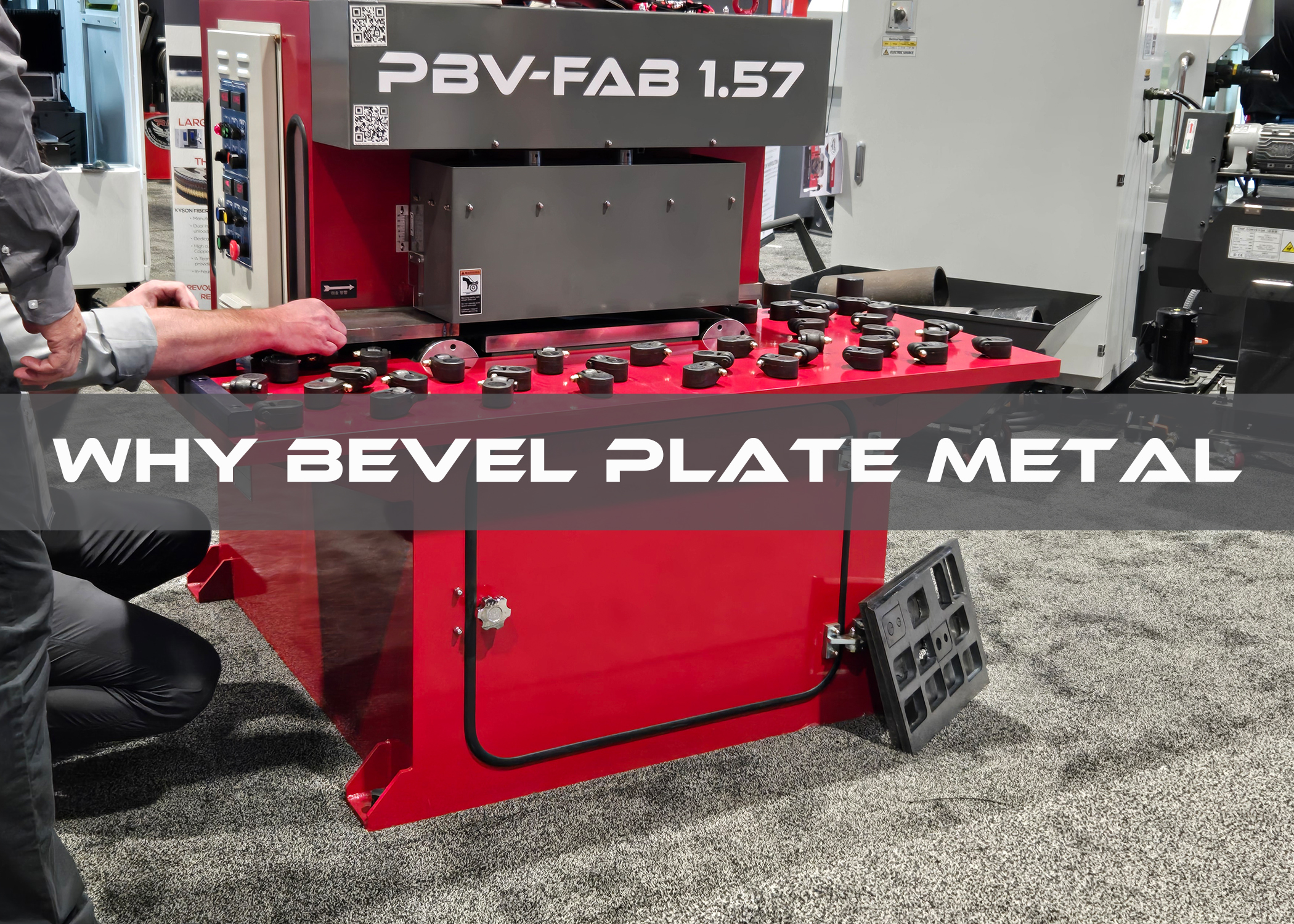
- Mechanical Beveling. Mechanical beveling is one of the most precise and commonly used methods, particularly for large-scale applications. This process involves the use of machines like milling machines, grinders, belt sanders, or task-specific bevelers that cut the bevel into the metal. Mechanical beveling ensures uniform angles and consistent results, especially for high-volume production. Portable beveling machines are available for use on-site and can easily handle heavy-duty work with precision. They are often used for straight-line bevels on flat metal plates and offer options for variable angles, making them versatile for different beveling requirements. Pipe beveling machines for use on the rounded edges of pipe sections are also available in the market.
- Thermal Beveling. Thermal beveling uses heat to cut the bevel, typically through oxy-fuel, plasma, or laser cutting processes. This method is popular for thick plate metals where other techniques may be too time-consuming or challenging. Oxy-fuel cutting, for example, uses a flame to preheat the metal edge before introducing oxygen, which rapidly oxidizes and removes material, creating the bevel. Plasma and laser cutting provide cleaner cuts with less heat distortion, suitable for finer or more detailed work. However, thermal beveling may require further finishing to remove any heat-affected zone (HAZ) that can weaken the metal.
- Hand-Held Beveling Tools. For smaller projects or when precision isn’t the highest priority, hand-held beveling tools, such as grinders or hand files, are effective. These tools allow for quick adjustments and are especially useful for creating custom or irregular bevels. Although they lack the consistency and precision of mechanical or thermal methods, hand-held tools are affordable and versatile for projects that require on-the-spot modifications.
- Automated CNC Beveling. CNC (Computer Numerical Control) beveling is an advanced method often used in high-precision industries for flat plate or rounded pipe. It involves computer-programmed machines that can bevel metal at specific angles and depths with exceptional accuracy. This method is suitable for complex beveling patterns and repetitive, high-volume work where consistency is critical. CNC beveling is often used in industries requiring precision, such as aerospace or automotive manufacturing.
A Note on Plate Thickness
Plates with a thickness of 1/4″ (6 mm) and above would usually be beveled to allow welders to access the root of the pieces being welded. Thinner material can also be beveled to allow a welder to deposit a weld bead that would be flusher with the surface and reduce or eliminate post-welding grinding.
Finding the Best Beveling Solution
Beveling plate metal is an essential preparatory step in metal fabrication that significantly influences the quality, efficiency, and safety of the final product. To find the best beveling method for your specific requirements, please contact a reputable metal fabrication machinery dealer to discuss the various options that are currently available on the market.