
Welding large cylindrical components—such as pipes, pressure vessels, and tanks for industrial use—presents unique challenges. Maintaining consistent weld quality, controlling distortion, and maximizing productivity are crucial to achieving strong, reliable joints. One of the most transformative tools developed to address these challenges are pipe rotators: a specialized machine that rotates cylindrical workpieces during welding and fabrication.
At its core, a pipe rotator is a powered roller support system—two sets of wheels or rollers that support a cylindrical workpiece and rotate it about its longitudinal axis. By turning the pipe at controlled speeds while welding, operators can deliver uniform, stable welds without physically maneuvering around the piece. This creates a safer and more efficient workflow, especially on large, heavy components.
Origins and Development of Pipe Rotation
The concept of rotating a workpiece to facilitate machining and welding isn’t new; lathes and turning rolls have been used for more than a century. Traditional metal lathes rotate workpieces so cutting tools can remove material. In welding and fabrication, the requirement is different: rather than cutting metal with a tool held stationary, welds must be applied consistently around a surface. This led to the development of turning rolls and eventually purpose-built pipe rotators.
Early turning rolls were simple, manually powered roller stands used to support tank shells and large vessels. As welding automation advanced in the late 20th century, these stands were motorized to rotate heavy components. With automation’s growth, particularly in pipeline construction and petrochemical fabrication, more precise and heavier-duty rotators were developed. The introduction of variable-speed drives, remote control, and integrated welding carriages allowed manufacturers to tailor rotation to welding needs—slower for manual TIG welds, faster for mechanized GMAW and FCAW—but always aimed at improving quality and reducing operator fatigue.
How Pipe Rotators Are Used Today
Modern pipe rotators are integral in welding shops, fabrication yards, and industrial manufacturing facilities worldwide. Their main purpose is to rotate cylindrical workpieces—typically pipes and vessels—during welding operations so that the welding torch (or welding head in automated systems) can remain stationary relative to the seam.
Primary applications include:
- Pipeline fabrication and welding. Long runs of pipe sections are rotated so welders can complete circumferential welds quickly and consistently.
- Pressure vessel manufacturing. Large tanks used in chemical, power, and petrochemical industries require precise welds around their circumference. Rotators stabilize and turn these heavy shells.
- Tank fabrication. Storage tanks for fuels, water, and industrial liquids often need circumferential welds. Rotators help by spinning the structure during welding.
- Offshore and shipbuilding fabrication. Large cylindrical components, including risers, columns, and pipeline spools, benefit from the consistency and precision of rotating support systems.
Operational benefits of pipe rotators include:
- Even weld quality. By rotating the workpiece at a steady, controlled speed, welders produce uniform bead shape and penetration with fewer starts and stops.
- Reduced operator fatigue and safety risk. Rather than moving around a large pipe to reach the weld joint, the worker stays in a fixed, ergonomic position.
- Improved efficiency. Welding productivity increases as setup times decrease and consistent rotation helps maintain optimal welding parameters.
- Lower distortion. Controlled rotation allows consistent heat distribution, minimizing warpage and distortion during weld cooling.
Some advanced pipe rotators are paired with welding carriages—automated devices that carry welding heads around the pipe. Together, they provide fully mechanized welding systems capable of high throughput with minimal manual intervention.
The Future of Pipe Rotators
As manufacturing and fabrication technology continues to evolve, so too will pipe rotators.
Anticipated trends include:
- Integration with robotics and automation. Welding robots mounted on programmable gantries or carriages, combined with pipe rotators, allow fully automated circumferential welding with adaptive speed control and sensor feedback for quality assurance.
- Smart control and digital feedback. IoT-enabled (Internet of Things) rotators capable of reporting real-time operational data—rotation speed, torque, downtime, faults, and productivity metrics—will facilitate predictive maintenance and improved process control.
- Advanced materials fabrication. With increased use of exotic alloys and composite materials, adaptive rotators that can finely tune speed and torque for sensitive welding processes (like orbital TIG welding of stainless and high-alloy tubing) will be in higher demand.
- Augmented reality (AR) support and remote diagnostics. Technicians could monitor rotator performance and diagnose issues remotely via AR interfaces, reducing downtime and expert travel costs.
- Sustainability and efficiency emphasis. Rotators with energy-efficient drive systems and regenerative braking (capturing rotational energy for reuse) may become more commonplace as industries focus on reducing environmental impact and operational costs.
Pipe Rotators from Revolution Machine Tools
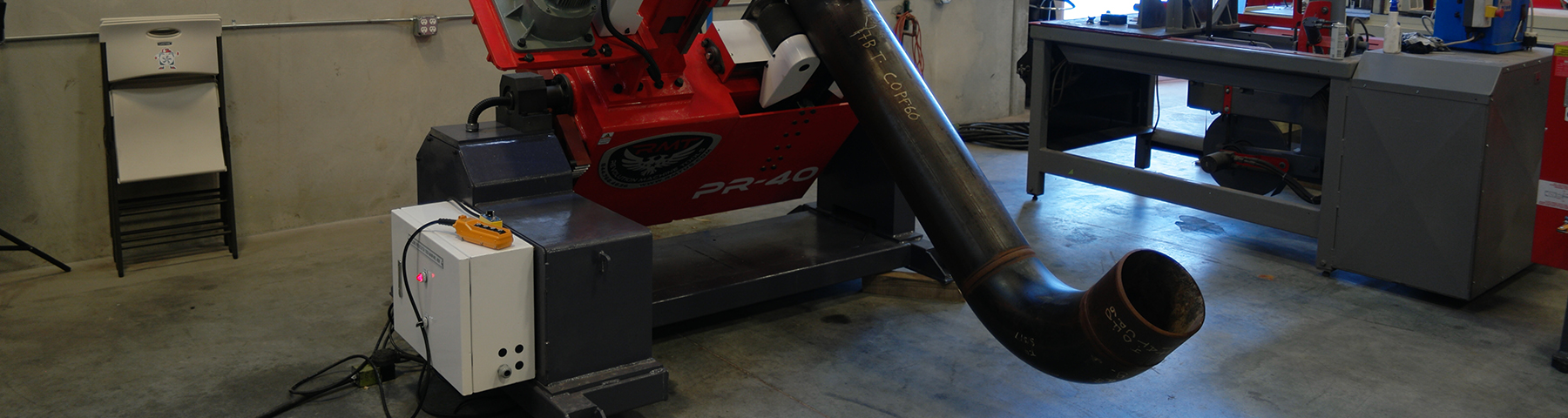
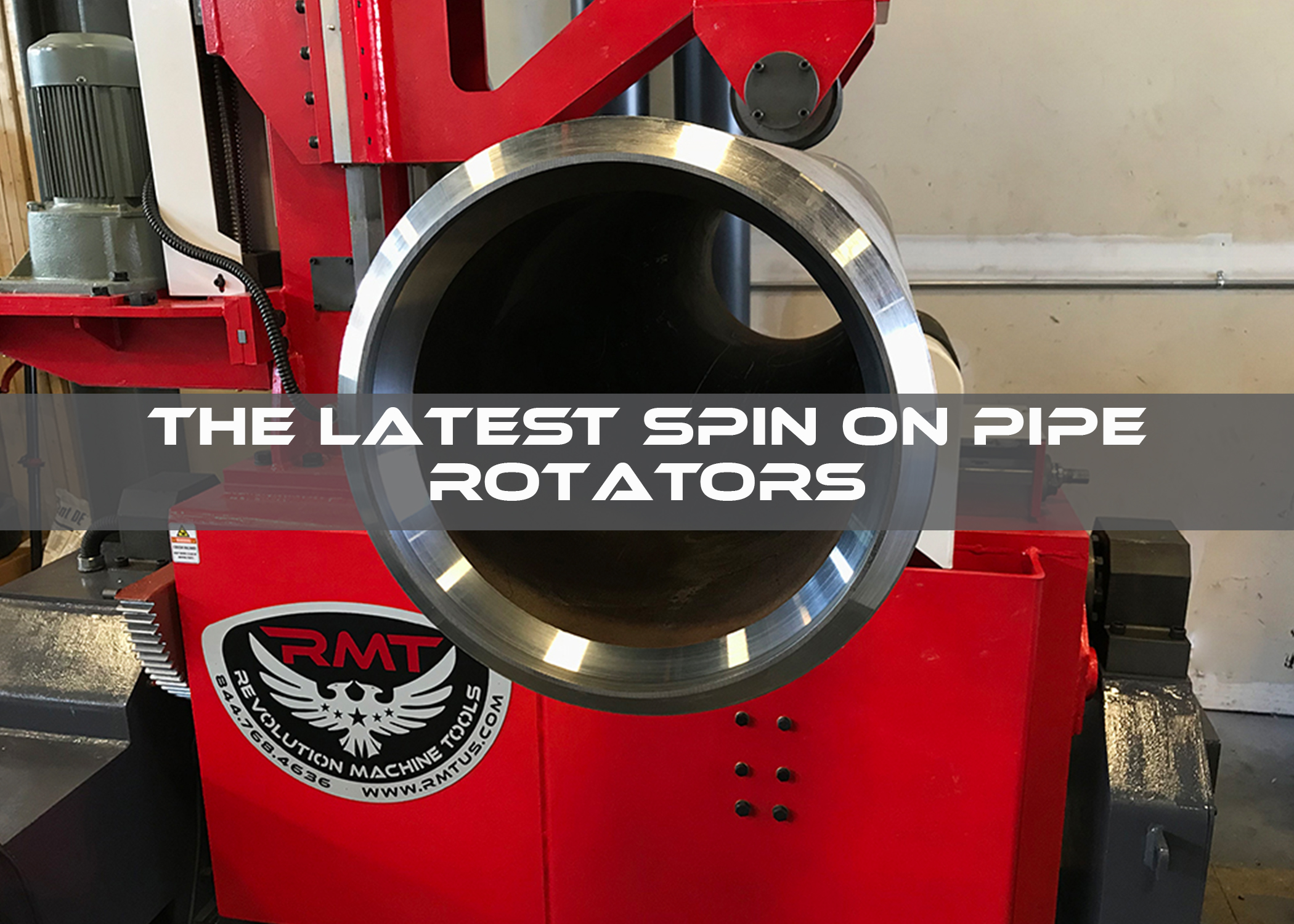
Among the market leaders in pipe rotation systems are the RMT PR™ Series pipe rotators from Revolution Machine Tools—recognized for their robust engineering, precision performance, and adaptability to demanding welding and fabrication environments.
Built for Heavy-Duty Applications. RMT rotators are engineered to handle a wide range of component sizes and weights—from modest diameter pipes to massive pressure vessel shells. Their rugged construction and heavy-duty drive systems provide excellent torque and control, even when supporting extremely heavy loads typical of industrial fabrication yards.
Precision Control and Smooth Operation. A defining feature of RMT rotators is their precision speed control and smooth operation. Equipped with advanced variable frequency drives (VFDs) and ergonomic control consoles, operators can fine-tune rotational speed to match the welding process—whether slow speeds for TIG welding or higher speeds for automated MIG/FCAW applications. This level of control directly contributes to superior weld quality and reduced rework.
RMT’s rotators use high-quality bearings and precisely aligned rollers, which minimize vibration and ensure consistent contact with the workpiece. This stability is especially critical for automated welding systems where consistent motion profiles are needed to maintain bead shape and penetration.
Modular and Flexible Design. The modular design of RMT pipe rotators allows shops to adapt configurations for different jobs. Whether working with diameter changes, length variations, or unique fixturing requirements, RMT systems can integrate with welding carriages, positioners, and ancillary equipment. This flexibility reduces the need for multiple dedicated machines and boosts overall shop efficiency.
Durability and Reliability. Fabrication environments are tough; equipment must withstand dust, heat, and continuous operation. RMT rotators are built with robust housings, sealed electrical components, and corrosion-resistant finishes, all contributing to long service life with minimal maintenance. Many customers cite low lifecycle costs and high uptime as key advantages of choosing RMT systems.
Enhanced Safety and Operator Experience. Safety features such as emergency stop controls, overload protection, and intuitive operator interfaces make RMT rotators an excellent choice for both manual and semi-automated welding operations. Operators appreciate the ergonomics and the ability to set and monitor rotation parameters from a safe, convenient control station.
Supporting Modern Fabrication Needs. As welding automation grows, RMT machines are well-positioned to integrate with advanced welding carriages, robotic arms, and digital process controls. Their precision motion capabilities, reliability, and adaptability make them a strong foundation for fabricators looking to modernize and scale their operations.
An Indispensable Welding Accessory
Pipe rotators have become indispensable in welding and fabrication, evolving from simple turning rolls to sophisticated, digitally capable machines that deliver greater precision, safety, and productivity. As industries press forward with automation, robotics, and high-performance materials, pipe rotators will continue to play a central role—especially systems like RMT pipe rotators, which combine rugged engineering, precise control, adaptability, and reliability to meet the demands of today’s and tomorrow’s fabrication challenges.